

Pneumatic Fluorine-Lined Flange Ball Valve
The Pneumatic Fluorine-Lined Flange Ball Valve is an advanced valve system designed to offer exceptional performance in corrosive, abrasive, and chemical processing applications. With a fluorine-lined interior, this valve is specifically built to handle highly reactive chemicals, acids, and other aggressive fluids. The pneumatic actuation provides reliable and precise control over fluid or gas flow, making it ideal for industries such as chemical, petrochemical, pharmaceutical, and food processing.
This valve’s flanged design ensures compatibility with most piping systems, while its fluorine lining provides unparalleled resistance to corrosion, abrasion, and extreme temperatures. In this article, we will cover the key features of the Pneumatic Fluorine-Lined Flange Ball Valve, its upgrade and maintenance plans, operation instructions, usage methods, and a user guide to ensure optimal performance.
Before diving into the technical details, it’s essential to understand the key features and benefits of the Pneumatic Fluorine-Lined Flange Ball Valve:
Fluorine-Lined Interior: Offers superior protection against corrosion and chemical attack, making it perfect for handling aggressive fluids and chemicals.
Pneumatic Actuation: Provides fast and accurate control of the valve, ensuring quick response times and minimizing downtime.
Flanged Design: Ensures a secure, leak-proof connection to piping systems, providing reliable operation.
High Temperature and Pressure Resistance: The valve can withstand high temperatures and pressure without compromising on performance.
Low Maintenance Requirements: Due to the fluorine lining, the valve has a long service life and requires minimal maintenance.
Leak-Free Operation: The design and sealing materials prevent leakage, ensuring efficiency and safety in demanding applications.
For optimal performance and longevity, it is recommended to conduct a comprehensive inspection of the Pneumatic Fluorine-Lined Flange Ball Valve on an annual basis. This helps identify any wear and tear on the valve components and ensures that it operates efficiently. The maintenance plan typically includes the following:
Check Pneumatic Actuator: Verify that the actuator is functioning correctly and that the valve opens and closes smoothly.
Inspect Seals and Gaskets: Ensure that the seals and gaskets are intact and free from damage. Replace them if necessary to prevent leakage.
Test for Corrosion or Wear: Inspect the fluorine lining and the body of the valve for any signs of corrosion or wear, particularly around the seals and the flow path.
Lubrication: Apply suitable lubricant to the actuator’s moving parts to maintain smooth operation.
Pressure Test: Conduct a pressure test to ensure the valve can withstand the working pressure without leaking.
In addition to the annual inspection, regular maintenance should be conducted every six months. This includes:
Checking Air Supply: Verify that the pneumatic actuator is receiving the correct air pressure (typically 4-8 bar). Ensure the air supply system is free from moisture and contamination.
Inspecting Valve Performance: Test the valve’s opening and closing functionality. Check for any sluggish or incomplete movement.
Seal Replacement: Replace any worn or damaged seals and gaskets to prevent leaks and ensure optimal valve performance.
After three years of use, it’s recommended to conduct a full valve service. This includes disassembling the valve and inspecting all internal components:
Valve Body Inspection: Check the valve body for cracks, corrosion, or other forms of damage.
Replace Internal Components: If any internal components show signs of wear or fatigue, they should be replaced immediately.
Full Rebuild: A complete rebuild, including a replacement of seals, gaskets, and any worn parts, will extend the life of the valve.
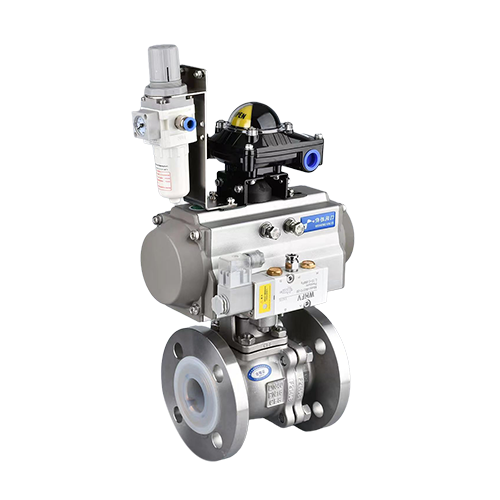
The Pneumatic Fluorine-Lined Flange Ball Valve is designed for easy operation and fast flow control in demanding environments. Below are the key steps for operating this valve:
Before operating the valve, ensure it is correctly installed within the piping system. The flanged connections should be tightly sealed with gaskets to prevent leakage. Make sure the valve's flow direction matches the system’s requirements. The valve should be connected to the pneumatic actuator and air supply line, with the correct pressure range (usually between 4-8 bar) to ensure efficient operation.
The pneumatic actuator controls the opening and closing of the valve. The actuator is connected to an air supply, and when air pressure is applied, it opens or closes the valve. The three-way valve design allows for precise control over fluid flow, enabling the user to divert, mix, or shut off the flow based on system needs.
To open: Apply air pressure to the actuator, causing the valve to open and allow the flow of fluid.
To close: Release the air pressure, which closes the valve and stops the flow.
Monitor the valve's operation regularly. Check for any signs of malfunction such as sluggish movement or unusual noise during operation. If the valve fails to operate smoothly, check the air supply and actuator pressure.
The Pneumatic Fluorine-Lined Flange Ball Valve is versatile and can be used in various industries where chemical resistance and reliable flow control are crucial. The valve is suitable for:
Chemical Processing: Handling aggressive chemicals, acids, solvents, and other reactive fluids.
Petrochemical Industry: Managing crude oil, gas, and petrochemical products under high pressure and temperature.
Pharmaceutical Manufacturing: Ensuring sterile and contamination-free fluid control in pharmaceutical production lines.
Water Treatment: For controlling water flow in corrosive or chemically-treated water systems.
Food and Beverage Industry: Offering safe and hygienic fluid control in food production and processing systems.
Proper installation is critical to the performance of the Pneumatic Fluorine-Lined Flange Ball Valve. Follow these steps for a proper installation:
Step 1: Ensure that the valve’s flange size and connection type are compatible with your system’s piping. The valve should be oriented according to the flow direction indicated on the valve body.
Step 2: Attach the valve to the piping system, ensuring that gaskets are in place to prevent leaks. Tighten the flange bolts evenly using a cross-tightening pattern to ensure a secure connection.
Step 3: Connect the pneumatic actuator to the valve and the air supply line. Make sure the air supply system is clean and free of moisture to ensure smooth actuator operation.
Step 4: Once installed, perform an initial test to verify that the valve opens and closes as expected and that there are no leaks.
While the Pneumatic Fluorine-Lined Flange Ball Valve is highly reliable, issues may occasionally arise. Here are common issues and their solutions:
| Problem | Possible Cause | Solution |
|---|---|---|
| Valve not opening/closing | Low or no air supply, faulty actuator | Check air supply pressure and ensure actuator is functional |
| Leakage around seals | Worn or damaged seals | Replace seals and gaskets |
| Sluggish valve operation | Dirty actuator or valve components | Clean actuator and valve, check for obstruction |
| Valve sticking | Corrosion or buildup inside valve body | Disassemble valve, clean, and inspect for corrosion |
The Pneumatic Fluorine-Lined Flange Ball Valve is a durable, high-performance valve ideal for handling aggressive fluids, chemical reactions, and high-pressure systems. By following the outlined maintenance plans, operation instructions, and user guides, users can ensure long-lasting, reliable performance. Whether used in chemical processing, petrochemical applications, or pharmaceutical production, this valve provides efficient and leak-free operation, making it a trusted solution for demanding industries.
For more information, or to purchase the Pneumatic Fluorine-Lined Flange Ball Valve, contact our sales team today.
 RELATED
 RELATED
 RELATED
Tel: +86 577 8699 9257
Tel: +86 135 8786 5766 /+86 137 32079372
Email: wzweiheng@163.com
Address:No. 1633, Yidaoba Road, Binhai Industrial Park, Wenzhou City, Zhejiang Province

Scan wechat
This website uses cookies to ensure you get the best experience on our website.
 Español
 Portugues
 Pусский
 Français
 Deutsch
 한국어
한국어 العربية
 Italiano
 ไทย
ไทย Türk dili
 हिन्दी
 Melayu
 Tiếng Việt
 dansk
dansk қазақ
қазақ বাংলা
বাংলা українська
 Filipino
 o'zbek



 Phone
Phone