

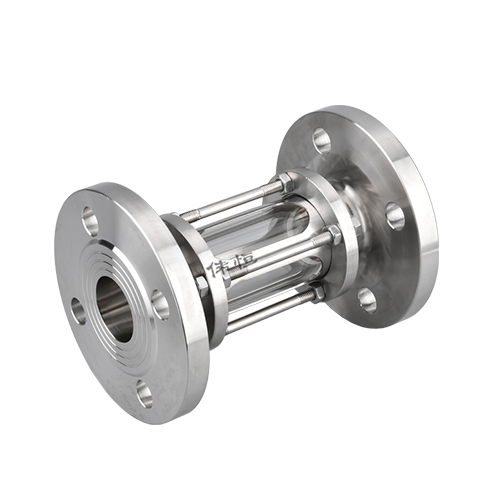
Sanitary pipe glass pass-through quick installation sight lens is a high-quality, high-reliability pipe fitting, usually used in occasions where the fluid inside the pipe needs to be observed. This type of sight glass is usually made of high-quality glass material, which has the advantages of high transparency, corrosion resistance, and wear resistance.
The design and manufacturing process of piped glass pass-through quick sight lenses makes them have the following characteristics:
Straight-through structure: The internal structure of the sight glass is a straight-through type, which can ensure the smooth flow of fluid in the pipeline and reduce the resistance of the fluid.
Quick-release features: The installation of the sight lens is simple and fast, and it can be done by quick-release without special tools or techniques.
High-quality glass: The sight lens is made of high-quality glass material, which has the advantages of high transparency, corrosion resistance, and wear resistance, which can ensure stability and reliability during long-term use.
Wide range of application: Pipe glass straight-through quick installation sight lenses are suitable for various pipeline systems, such as pharmaceutical, food, chemical and other industries in fluid transmission pipelines.
The pipe glass pass-through quick installation sight glass is a high-quality, high-reliability pipe fitting that can meet the needs of various piping systems. Its use can improve the safety and reliability of piping systems and help ensure quality and efficiency in the production process.
Sanitary pipe glass straight through quick installation sight glass is a kind of sight lens used in fluid conveying pipelines in pharmaceutical, food, chemical and other industries, with the characteristics of high hygiene performance and quick installation.
This kind of sight glass is made of high-transparency glass material, which meets the national requirements for Sanitary Pipe Fittings and can ensure that the fluid flows in the pipeline without pollution. In addition, the design and manufacturing process of the sight lens gives it a straight-through structure and quick installation features, allowing for quick installation without the need for special tools or techniques.
Compared with traditional pipe sight scopes, sanitary pipe glass straight through quick installation sight glasses have better hygienic performance and more reliable observation results. Its use can reduce fluid resistance in the pipeline system, improve the pipeline transportation efficiency, and ensure quality and safety in the production process.
Sanitary pipe glass straight-through quick installation sight glass is a high-quality, high-reliability pipe fitting that can meet the needs of various piping systems. Its use can improve the safety and reliability of piping systems and help ensure quality and efficiency in the production process.
| Model representation method | ||||||||||||
| WH | -600 | —Q1 | —C1 | —F | —16 | —P | —25 | —D1 | —B | —W2 | —B2 | —L |
| >1. Weiheng brand | >2. Drive mode | >3. Valve body type | >4. Connection method | >5. Sealing material | >6. Nominal pressure | >7. Valve body material | >8. Nominal diameter | >9. Control mode | >10. Explosion-proof level | —20~150℃ | >12. Accessory options | >13. Three flows |
| 1~7 mandatory options, 8~13 optional | ||||||||||||
| 1 codename | 5 codename | Sealed material | 10 code | Explosion-proof rating | |
| WH | Weiheng brand | F | PTFE | B | ExdIl BT4 Gb explosionproof and explosion-proof type |
| PPL | Para-polyphenylene | BZ | ExdllCT5 Gb explosion-proof and explosion-proof type | ||
| 2 codename | Drive mode | H | Metal hard seal | BC | Exdll CT6 Gb explosionproof and explosion-proof type |
| 600 | Pneumatic actuator series | Y | cemented carbide | BM | ExmbllT4 Gb cast explosion-proof type |
| 900 | Electric actuator system | X1 | Ding Qing rubber NBR | BA | Exiall CT6Ga intrinsically safe and explosion-proof |
| 2001 | Column plastic actuator angle seat valve series | X2 | Natural rubber NR | ||
| 2002 | Stainless steel actuator angle seat valve series | X3 | EPDM | 11 codenames | Medium temperature |
| X4 | Viton rubber FPM | W1 | -20-80C | ||
| 3 codename | Body type | X5 | Food grade silicone rubber SI | W2 | -20-150C |
| Q1 | Two-way valve | F46 | Fully lined polyperfluoroethylene FEP | W3 | -20-250C |
| Q2 | Three-way valve | PFA | Fully lined with soluble PTFE PFA | W4 | -29-425C |
| Q3 | Four-way valve | F4 | Fully lined PTFE | W5 | -29-650C |
| Q4 | Stationary ball valve | N | nylon | W6 | -196-60C |
| Q5 | V-ball | TC | Lined ceramic | ...... | ...... |
| Q6 | Low profile ball valve | J | Rubber lining | It has a special temperature that can be designed and manufactured according to customer requirements | |
| Q7 | Sanitary grade ball valves | PEEK | Polyether ether ketone | ||
| Q8 | Plastic ball valves | W | When the ring | 12 codenames | Accessory selection |
| Q9 | High Vacuum Ball Valve | ...... | ...... | B1 | 2-position, 3-way solenoid valve |
| Q10 | Fluorine ball valve in the whole village | Other special sealing materials can be designed and manufactured according to customer requirements | B2 | 2-position 5-way solenoid valve | |
| Q11 | Cryogenic ball valves | B3 | 2-position 3-way explosion-proof solenoid valve | ||
| Q12 | Insulated ball valve | 6 codename | Nominal pressure | B4 | 2-position 5-way explosion-proof solenoid valve |
| Q13 | Eccentric hemispherical valve | ...... | ...... | B5 | Filter pressure reducing valve |
| Q14 | Tank bottom valve | B6 | Limit switch | ||
| Q15 | Ceramic ball valves | 7 codename | Body material | B7 | Explosion-proof limit switch |
| D1 | Centerline soft-sealed butterfly valve | Q | Ductile iron HT200 | B8 | Hand manipulation mechanism |
| D2 | 3. Eccentric butterfly valve | C | carbon steel | B9 | Locator |
| D3 | Sanitary Butterfly Valve | P | Stainless steel 304 | ...... | ...... |
| D4 | Plastic butterfly valve | R | Stainless steel 316 | ||
| D5 | Ventilation butterfly valve | PL | Stainless steel 304L | 13 codenames | Three flows |
| D6 | Fluorine butterfly valve in the whole village | RL | Stainless steel 316L | L | Tee L-type BC switching |
| D7 | High vacuum butterfly valve | U | PVC UPVC | T1 | Tee T-type C-port switch |
| D8 | Powder butterfly valve | PP | Reinforced polypropylene RPP | T2 | Tee T-type AB switching |
| Z1 | Gate valve | L | Aluminum alloy | T3 | Tee T-type AC switching |
| Z2 | Knife gate valve | ...... | ...... | T4 | Tee T-type B-port switch |
| J1 | Globe valve | Other special valve body materials can be designed and manufactured according to customer requirements | |||
| J2 | Bellows cut stop valve | ||||
| J3 | Angle seat valve | 8 codename | It is called the path | ||
| F1 | Upward expansion discharge valve | ...... | ...... | ||
| F2 | Downward discharge valve | ||||
| Other special valve body materials can be designed and manufactured according to customer requirements | 9 code | Control mode | |||
| Z | Standard switch type | ||||
| 4 codenames | Connection | T1 | Integral switching type | ||
| C1 | Female thread | T2 | Overall adjustment | ||
| C2 | By order | T3 | RS485 bus type | ||
| C3 | Male thread | D1 | Double acting | ||
| C4 | flange | D2 | Double-acting adjustment type | ||
| C5 | KF vacuum chuck | E1 | Uni-acting normally closed | ||
| C6 | weld | E2 | Single-acting normally closed regulation type | ||
| C7 | Pair clip | E3 | Single-acting and always open | ||
| C8 | Clamps | E4 | Single-acting normally open adjustment type | ||
Sanitary Flange Mirror: A Comprehensive Guide
The Sanitary Flange Mirror is a critical component in high-performance piping systems, especially in industries such as food processing, beverages, pharmaceuticals, and biotechnology. Known for its smooth surface finish, the mirror-finished flange is designed to meet the highest standards of hygiene and cleanliness. Its ability to resist corrosion and facilitate easy cleaning makes it an ideal choice for sanitary applications where contamination-free conditions are essential.
This guide will cover everything you need to know about the Sanitary Flange Mirror, including its operating procedures, installation steps, inspection standards, and material specifications, all tailored to ensure optimal performance and durability.
| Feature | Benefit |
|---|---|
| Material | Stainless steel (304/316L) for high corrosion resistance and durability. |
| Finish | Mirror finish that ensures smooth, non-porous surfaces for easy cleaning and compliance with hygiene standards. |
| Flange Type | Sanitary flange design for secure, leak-proof connections in food-grade piping systems. |
| Certifications | FDA, 3-A, and EHEDG certified, ensuring compliance with sanitary and food-grade regulations. |
| Sealing | Equipped with gasket or O-ring seals to provide reliable leak protection. |
| Temperature and Pressure Rating | Handles high-pressure and high-temperature applications, typically up to 150 psi and 150°C. |
| Ease of Maintenance | Easy to clean and maintain, minimizing downtime and ensuring long-lasting performance. |
The Sanitary Flange Mirror is primarily made from stainless steel, ensuring that it can withstand harsh operational conditions without compromising on hygiene or durability. Stainless steel, particularly 304 and 316L, is widely used in sanitary applications due to its:
Corrosion Resistance: Stainless steel is highly resistant to corrosion, especially in aggressive environments, making it perfect for use in the food, beverage, and pharmaceutical industries.
Non-reactivity: Stainless steel is non-reactive with most substances, which ensures that the flange does not alter the quality of the materials it comes in contact with.
Ease of Cleaning: With its mirror finish, stainless steel provides a smooth, non-porous surface, making it easier to clean and ensuring compliance with strict hygiene standards.
| Material Type | Advantages |
|---|---|
| 304 Stainless Steel | Excellent corrosion resistance and suitable for most sanitary applications. |
| 316L Stainless Steel | Better resistance to corrosive substances, particularly chlorides and acids, making it ideal for food processing and harsh environments. |
The Sanitary Flange Mirror is designed for seamless operation in demanding sanitary environments. Proper operation ensures the longevity of the system and optimal performance in critical applications. Below are the key operational guidelines:
To maintain the hygienic integrity of the piping system:
Use approved cleaning agents: Always use cleaning agents that are compatible with stainless steel and approved for food-grade applications.
Sanitize regularly: Clean and sanitize the flange according to the operating conditions and frequency of use to prevent build-up of contaminants.
Perform regular checks: Regularly inspect the surface for any signs of wear or contamination. Ensure that the mirror finish is intact and free of rust, scratches, or damage.
Ensure that the operating pressure does not exceed the rated limits of the flange, typically up to 150 psi.
Monitor temperature conditions and avoid exceeding the maximum temperature (150°C), as high temperatures can damage the flange and affect its performance.
Perform regular leak tests to ensure that the seals and gaskets are functioning correctly.
If leaks are detected, inspect the flange for misalignment or damaged seals and replace any faulty components promptly.
Proper installation of the Sanitary Flange Mirror is crucial to achieving a secure, leak-proof connection and ensuring system performance. Below are the steps for installing the Sanitary Flange Mirror:
Clean the pipes: Ensure that both the flange and the pipes are thoroughly cleaned before installation to prevent contamination.
Check compatibility: Verify that the pipe size and flange size match the specifications of the Sanitary Flange Mirror.
Align the flange: Place the Sanitary Flange Mirror in the correct position along the pipe system. Ensure that the flanges on the pipe and the fitting align properly to ensure a secure fit.
Install the gasket: Place a compatible gasket (usually made of rubber or PTFE) between the flange faces to ensure a leak-proof seal.
Ensure the gasket is properly aligned with the flange's sealing surface.
Tighten the bolts: Use an even tightening pattern to tighten the bolts of the flange. Avoid over-tightening as it may cause deformation of the flange or gasket, leading to leaks.
After installation, conduct a pressure test to ensure there are no leaks in the system.
Perform a visual inspection to ensure proper alignment and secure connections.
To ensure the Sanitary Flange Mirror functions optimally and maintains hygiene standards, periodic inspections are required. Here are some key inspection standards:
Inspect the surface of the mirror flange for any signs of damage, such as scratches, rust, or corrosion. Any surface damage could compromise the hygiene integrity of the system.
Perform pressure testing to verify that the flange can handle the required pressure ratings without leaking or failing. This ensures that the flange can withstand the operating conditions.
Inspect seals and gaskets regularly for wear and tear. Damaged seals can cause leaks and contamination, leading to system failure.
Replace gaskets at regular intervals or when signs of wear are visible.
Although the Sanitary Flange Mirror is durable and easy to maintain, occasional issues may arise. Here are some common troubleshooting and maintenance tips:
Cause: Improper sealing or worn-out gaskets.
Solution: Inspect the seals and gaskets. Replace any damaged components and ensure that the flange is properly tightened.
Cause: Misalignment of pipes or flanges.
Solution: Ensure proper alignment before tightening bolts. Use a flange alignment tool if necessary to ensure precise placement.
Cause: Exposure to harsh chemicals or inadequate cleaning.
Solution: Regularly clean and sanitize the flange with appropriate agents. Inspect the system for any aggressive chemicals that may cause corrosion.
The Sanitary Flange Mirror is a crucial component in ensuring the efficiency and safety of sanitary piping systems. Whether you're in food processing, pharmaceuticals, or biotechnology, the mirror-finished flange provides the corrosion resistance, hygiene, and durability needed for a successful operation. By following the installation steps, adhering to inspection standards, and performing regular maintenance, you can extend the lifespan and performance of your Sanitary Flange Mirror.
For more information or to place an order, contact us today. We offer a range of Sanitary Flange Mirrors tailored to your system's needs, ensuring high-quality performance and compliance with the highest industry standards.
Tel: +86 577 8699 9257
Tel: +86 135 8786 5766 /+86 137 32079372
Email: wzweiheng@163.com
Address:No. 1633, Yidaoba Road, Binhai Industrial Park, Wenzhou City, Zhejiang Province

Scan wechat
This website uses cookies to ensure you get the best experience on our website.
 Español
 Portugues
 Pусский
 Français
 Deutsch
 한국어
한국어 العربية
 Italiano
 ไทย
ไทย Türk dili
 हिन्दी
 Melayu
 Tiếng Việt
 dansk
dansk қазақ
қазақ বাংলা
বাংলা українська
 Filipino
 o'zbek



 Phone
Phone