

A Pneumatic Diaphragm Valve is a special type of valve that plays an important role in industrial applications. This article will introduce the characteristics, working principle, application fields, precautions for use, and maintenance methods of pneumatic diaphragm valves.
1. Overview
A pneumatic diaphragm valve is a special type of valve that is designed
with a diaphragm that can move within the valve cavity. The diaphragm
divides the valve channel into two parts, one for passing the liquid and
the other for stopping the flow of liquid. This design gives pneumatic
diaphragm valves some unique advantages, such as easy operation, good
sealing, and a wide range of flow regulation.
2. Characteristics
Simple structure: The structure of pneumatic diaphragm valves is relatively simple, mainly composed of components such as valve body, valve cover, valve disc, diaphragm and stem. This construction makes pneumatic diaphragm valves easy to manufacture and service.
Wide flow adjustment range: Due to the presence of diaphragms, pneumatic diaphragm valves can control the flow rate by adjusting the position of the disc. This wide adjustment range makes it an ideal choice in many application scenarios.
Easy to operate: The operation method of the pneumatic diaphragm valve is very simple, only need to control the movement of the valve stem through the pneumatic drive to realize the opening and closing of the valve. This mode of operation makes pneumatic diaphragm valves ideal for use in automation systems.
3. Working principle
The working principle of a pneumatic diaphragm valve is to control the
movement of the valve stem through a pneumatic actuator, which in turn
pushes the position of the diaphragm and disc. When the valve is closed,
the diaphragm and disc block fluid from entering the pipe; When the
valve is opened, fluid can flow through the channel. This working
principle makes the pneumatic diaphragm valve have good sealing
performance and flow regulation performance.
4. Application fields
The application fields of pneumatic diaphragm valves are very wide, including but not limited to the following industries:
Chemical Industry: Pneumatic diaphragm valves play a crucial role in chemical production, such as fluid control between chemical reactors, storage tanks, and pipelines.
Water Treatment Industry: Pneumatic diaphragm valves are also widely used in water treatment, such as controlling the flow and pressure of fluids in sewage treatment, water purification systems, and water supply systems.
Oil and Gas Industry: Pneumatic diaphragm valves also play a crucial role in oil and gas extraction, transportation, and processing. It can be used to control the flow of fluids between the tank and the pipeline while also preventing gas leakage.
Food and beverage industry: In food and beverage production processes, pneumatic diaphragm valves can be used to control fluid flow and pressure, ensuring product quality and production efficiency.
5. Precautions for use
Ensure proper installation and maintenance of the pneumatic actuator: When using a pneumatic diaphragm valve, it is essential to ensure proper installation and maintenance of the pneumatic actuator. If the drive fails, it will affect the proper operation of the entire system.
Pay attention to fluid properties and temperature: Pneumatic diaphragm valves are suitable for a wide range of fluid properties and temperature environments, but in some cases, special attention is required. For example, for high-viscosity fluids and high-temperature environments, it is necessary to select suitable diaphragm and disc materials.
Regularly check valve sealing performance: The sealing performance of pneumatic diaphragm valves directly affects the normal operation of the system. Therefore, it is necessary to regularly check the valve sealing performance and replace worn components in time.
Avoid overpressure and overflow: When operating pneumatic diaphragm valves, you need to pay attention to fluid pressure and flow limits. If the limit is exceeded, it can cause damage to the valve.
6. Maintenance methods
Clean the valve regularly: Regularly clean the valve surface and internal diaphragm to ensure that no debris and dirt affect the valve's performance.
Replace diaphragms and discs regularly: Replace worn diaphragm and disc components regularly based on usage and maintenance manuals.
Check drive performance: Regularly check the performance of the pneumatic drive to ensure it is working properly. If abnormal sounds or malfunctions are found, they need to be repaired or replaced in time.
Keep the valve dry: Avoid using pneumatic diaphragm valves in humid environments to prevent rust and mold growth.
In conclusion, pneumatic diaphragm valves are a special type of valve that offers advantages such as simple structure, wide flow regulation range, and easy operation. Under the premise of correct use and maintenance, pneumatic diaphragm valves can exert good performance and reliability
| Model representation method | ||||||||||||
| WH | -600 | —Q1 | —C1 | —F | —16 | —P | —25 | —D1 | —B | —W2 | —B2 | —L |
| >1. Weiheng brand | >2. Drive mode | >3. Valve body type | >4. Connection method | >5. Sealing material | >6. Nominal pressure | >7. Valve body material | >8. Nominal diameter | >9. Control mode | >10. Explosion-proof level | —20~150℃ | >12. Accessory options | >13. Three flows |
| 1~7 mandatory options, 8~13 optional | ||||||||||||
| 1 codename | 5 codename | Sealed material | 10 code | Explosion-proof rating | |
| WH | Weiheng brand | F | PTFE | B | ExdIl BT4 Gb explosionproof and explosion-proof type |
| PPL | Para-polyphenylene | BZ | ExdllCT5 Gb explosion-proof and explosion-proof type | ||
| 2 codename | Drive mode | H | Metal hard seal | BC | Exdll CT6 Gb explosionproof and explosion-proof type |
| 600 | Pneumatic actuator series | Y | cemented carbide | BM | ExmbllT4 Gb cast explosion-proof type |
| 900 | Electric actuator system | X1 | Ding Qing rubber NBR | BA | Exiall CT6Ga intrinsically safe and explosion-proof |
| 2001 | Column plastic actuator angle seat valve series | X2 | Natural rubber NR | ||
| 2002 | Stainless steel actuator angle seat valve series | X3 | EPDM | 11 codenames | Medium temperature |
| X4 | Viton rubber FPM | W1 | -20-80C | ||
| 3 codename | Body type | X5 | Food grade silicone rubber SI | W2 | -20-150C |
| Q1 | Two-way valve | F46 | Fully lined polyperfluoroethylene FEP | W3 | -20-250C |
| Q2 | Three-way valve | PFA | Fully lined with soluble PTFE PFA | W4 | -29-425C |
| Q3 | Four-way valve | F4 | Fully lined PTFE | W5 | -29-650C |
| Q4 | Stationary ball valve | N | nylon | W6 | -196-60C |
| Q5 | V-ball | TC | Lined ceramic | ...... | ...... |
| Q6 | Low profile ball valve | J | Rubber lining | It has a special temperature that can be designed and manufactured according to customer requirements | |
| Q7 | Sanitary grade ball valves | PEEK | Polyether ether ketone | ||
| Q8 | Plastic ball valves | W | When the ring | 12 codenames | Accessory selection |
| Q9 | High Vacuum Ball Valve | ...... | ...... | B1 | 2-position, 3-way solenoid valve |
| Q10 | Fluorine ball valve in the whole village | Other special sealing materials can be designed and manufactured according to customer requirements | B2 | 2-position 5-way solenoid valve | |
| Q11 | Cryogenic ball valves | B3 | 2-position 3-way explosion-proof solenoid valve | ||
| Q12 | Insulated ball valve | 6 codename | Nominal pressure | B4 | 2-position 5-way explosion-proof solenoid valve |
| Q13 | Eccentric hemispherical valve | ...... | ...... | B5 | Filter pressure reducing valve |
| Q14 | Tank bottom valve | B6 | Limit switch | ||
| Q15 | Ceramic ball valves | 7 codename | Body material | B7 | Explosion-proof limit switch |
| D1 | Centerline soft-sealed butterfly valve | Q | Ductile iron HT200 | B8 | Hand manipulation mechanism |
| D2 | 3. Eccentric butterfly valve | C | carbon steel | B9 | Locator |
| D3 | Sanitary Butterfly Valve | P | Stainless steel 304 | ...... | ...... |
| D4 | Plastic butterfly valve | R | Stainless steel 316 | ||
| D5 | Ventilation butterfly valve | PL | Stainless steel 304L | 13 codenames | Three flows |
| D6 | Fluorine butterfly valve in the whole village | RL | Stainless steel 316L | L | Tee L-type BC switching |
| D7 | High vacuum butterfly valve | U | PVC UPVC | T1 | Tee T-type C-port switch |
| D8 | Powder butterfly valve | PP | Reinforced polypropylene RPP | T2 | Tee T-type AB switching |
| Z1 | Gate valve | L | Aluminum alloy | T3 | Tee T-type AC switching |
| Z2 | Knife gate valve | ...... | ...... | T4 | Tee T-type B-port switch |
| J1 | Globe valve | Other special valve body materials can be designed and manufactured according to customer requirements | |||
| J2 | Bellows cut stop valve | ||||
| J3 | Angle seat valve | 8 codename | It is called the path | ||
| F1 | Upward expansion discharge valve | ...... | ...... | ||
| F2 | Downward discharge valve | ||||
| Other special valve body materials can be designed and manufactured according to customer requirements | 9 code | Control mode | |||
| Z | Standard switch type | ||||
| 4 codenames | Connection | T1 | Integral switching type | ||
| C1 | Female thread | T2 | Overall adjustment | ||
| C2 | By order | T3 | RS485 bus type | ||
| C3 | Male thread | D1 | Double acting | ||
| C4 | flange | D2 | Double-acting adjustment type | ||
| C5 | KF vacuum chuck | E1 | Uni-acting normally closed | ||
| C6 | weld | E2 | Single-acting normally closed regulation type | ||
| C7 | Pair clip | E3 | Single-acting and always open | ||
| C8 | Clamps | E4 | Single-acting normally open adjustment type | ||
Stainless Steel Pneumatic Actuator Welded Diaphragm Valve
The Stainless Steel Pneumatic Actuator Welded Diaphragm Valve is a high-performance valve designed for precise flow control and pressure regulation in demanding industrial applications. Featuring a welded diaphragm design and pneumatic actuation, this valve provides superior leak-proof performance, energy-efficient operation, and easy maintenance. Made from corrosion-resistant stainless steel, it is suitable for chemical processing, water treatment, pharmaceutical applications, and food and beverage industries.
This guide will cover the transportation requirements, applications, common issues, and maintenance procedures for the Stainless Steel Pneumatic Actuator Welded Diaphragm Valve, providing essential information for both installation and long-term operation.
Before diving into the details, here are some of the key features and benefits of the Stainless Steel Pneumatic Actuator Welded Diaphragm Valve:
Pneumatic Actuation: Provides fast, reliable response for precise flow control and pressure regulation.
Welded Diaphragm: The welded diaphragm design ensures leak-free performance, reducing the need for frequent maintenance.
Corrosion-Resistant Construction: The valve is made from high-quality stainless steel, offering superior corrosion resistance for use in harsh chemical and high-temperature environments.
Energy-Efficient Operation: The pneumatic actuator offers low energy consumption, making it suitable for applications that require consistent operation.
Wide Application Range: Ideal for chemical processing, food and beverage, water treatment, and other industrial applications.
To ensure the Stainless Steel Pneumatic Actuator Welded Diaphragm Valve arrives in optimal condition, proper transportation and handling procedures must be followed.
The valve should be carefully packaged to prevent damage during transportation. Here are the recommended packaging requirements:
| Packaging Type | Description |
|---|---|
| Primary Packaging | Bubble wrap or foam padding for individual valves. |
| Secondary Packaging | Sturdy cardboard box with internal foam inserts to prevent movement. |
| Sealing and Labeling | Ensure the packaging is properly sealed, with clear labels indicating fragile and this side up markings. |
| Handling Instructions | Handle with care to avoid impact, and avoid stacking heavy loads on top. |
For domestic shipments, use standard freight services with proper tracking to ensure the valves are safely delivered.
For international shipments, use airfreight or sea freight, depending on the order volume. Ensure that the shipment is properly inspected for any potential customs or regulatory requirements.
Ensure that the valve is stored in temperature-controlled environments if necessary, especially for sensitive parts like seals or O-rings.
The valve should be stored upright and secured during transportation to prevent any damage to the actuator or diaphragm.
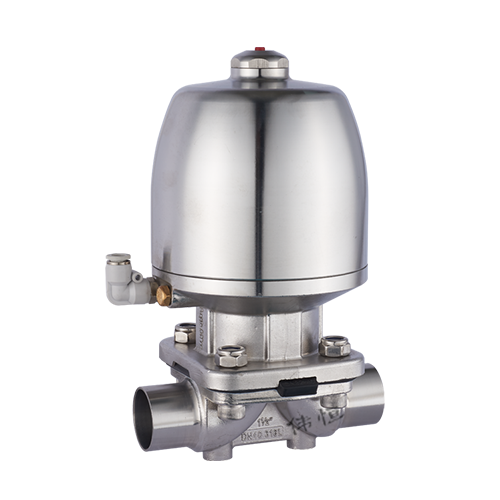
The Stainless Steel Pneumatic Actuator Welded Diaphragm Valve is a versatile solution for various industries that require precise control of fluid or gas flow. Below are the primary applications where this valve excels:
Application: The valve is ideal for chemical reactors, pressure relief systems, and acid-base systems in chemical manufacturing. Its corrosion-resistant stainless steel body ensures it can handle aggressive chemicals such as acidic, alkaline, or viscous fluids.
Benefit: The welded diaphragm design ensures tight sealing, preventing leaks and contamination.
Application: In municipal water treatment plants, the valve regulates the flow of treated water through filtration and disinfection systems.
Benefit: The valve’s durability and precise control ensure efficient operation in chlorination and pH adjustment processes.
Application: In food production lines, the valve controls the flow of liquids, gases, and semi-solids during pasteurization, sterilization, and pumping processes.
Benefit: Made from FDA-approved materials, the valve ensures sanitary standards are met while maintaining leak-free performance.
Application: The valve is used in sterilization and pharmaceutical processing systems to control flow in aseptic environments.
Benefit: Its easy-to-clean diaphragm and corrosion-resistant body make it perfect for handling active ingredients without contamination.
Application: The valve is used for pressure control in gas transmission lines or refinery systems, where fast shutoff is crucial.
Benefit: The pneumatic actuation provides fast and precise control in high-pressure systems.
While the Stainless Steel Pneumatic Actuator Welded Diaphragm Valve is designed for reliable performance, some common issues may arise during operation. Here’s a guide to diagnosing and resolving these issues.
Possible Cause: Insufficient pneumatic pressure or faulty actuator.
Solution: Check the air supply to the actuator, ensuring it is within the required range (4-8 bar). If the actuator is malfunctioning, inspect for wear and tear or blockage. If necessary, replace actuator parts.
Possible Cause: Damaged diaphragm or worn seals.
Solution: Inspect the diaphragm and seals for damage. If necessary, remove and replace the diaphragm. Ensure that the replacement parts are correctly fitted to prevent further leakage.
Possible Cause: Contaminated pneumatic system or actuator blockage.
Solution: Ensure the air supply is clean and free from moisture. Check for any blockages in the actuator or air passages. Clean or replace filters as needed.
Possible Cause: Dirt or debris in the valve body.
Solution: Disassemble the valve and clean all internal components with a non-abrasive cloth or brush. Ensure that there is no debris obstructing the flow path.
To ensure the Stainless Steel Pneumatic Actuator Welded Diaphragm Valve operates efficiently throughout its lifespan, proper maintenance is crucial. Below are the recommended maintenance procedures:
Frequency: Inspect the valve every 6 months or as required based on system operation.
Procedure: Check for any signs of wear, leaks, or damage to the actuator, diaphragm, or seals. Verify the integrity of the valve body and actuator connections.
Frequency: Replace the diaphragm every 18-24 months or when signs of wear are detected.
Procedure: Use the quick-release diaphragm design for easy removal. Ensure that the new diaphragm is correctly aligned to avoid leaks.
Frequency: Lubricate the actuator and moving parts every 6 to 12 months or as needed.
Procedure: Use recommended lubricants to reduce friction and ensure smooth operation. Avoid over-lubricating, as this can attract dirt.
Frequency: Perform checks on the air supply system at least once every 3-6 months.
Procedure: Ensure that the air supply is free from moisture and contaminants. Replace filters and regulators as needed to maintain clean, dry air flow.
Frequency: Check seals and O-rings annually for wear or damage.
Procedure: If seals or O-rings are cracked or deformed, replace them with compatible parts to ensure leak-proof operation.
The Stainless Steel Pneumatic Actuator Welded Diaphragm Valve is an essential component for industries requiring precise flow control and pressure regulation in demanding environments. Its pneumatic actuation, welded diaphragm design, and corrosion-resistant stainless steel body make it suitable for use in chemical processing, water treatment, food and beverage, and pharmaceutical applications.
By following the transportation requirements, application guidelines, and maintenance procedures outlined in this guide, you can ensure that your valve operates at peak performance, providing reliable, long-lasting service. For additional support or to inquire about purchasing, contact our sales team for expert advice.
 RELATED
Tel: +86 577 8699 9257
Tel: +86 135 8786 5766 /+86 137 32079372
Email: wzweiheng@163.com
Address:No. 1633, Yidaoba Road, Binhai Industrial Park, Wenzhou City, Zhejiang Province

Scan wechat
This website uses cookies to ensure you get the best experience on our website.
 Español
 Portugues
 Pусский
 Français
 Deutsch
 한국어
한국어 العربية
 Italiano
 ไทย
ไทย Türk dili
 हिन्दी
 Melayu
 Tiếng Việt
 dansk
dansk қазақ
қазақ বাংলা
বাংলা українська
 Filipino
 o'zbek



 Phone
Phone