

The pneumatic handwheel tank bottom valve is a highly clean, hygienic and non-retention diaphragm valve, which is mainly used in industrial fields such as biopharmaceuticals or food processing. It is installed at the bottom of the container equipment to empty the material inside the container and ensure that it does not become trapped inside the valve chamber. When a cleaning or opening task is required, the stem can be driven upward by manually rotating the handwheel or driving the pneumatic control actuator, so that the valve forms a conduction state. In addition, the ZMQF/ZSQF series pneumatic kettle bottom valve adopts an integrated DC structure, and the valve body is a streamlined unobstructed flow channel, which ensures smooth wear resistance, small flow resistance, and no dead ends.
A pneumatic handwheel tank bottom valve is a specialized type of
valve primarily used in industrial sectors such as biopharmaceuticals or
food processing. This valve is installed at the bottom of the container
equipment and is responsible for draining the material inside the
container to ensure that the material does not remain inside the valve.
In terms of working principle, when cleaning or opening tasks are required, the valve stem can be driven upward by manually rotating the handwheel or driving the pneumatic control actuator, so that the valve forms a conduction state. This design can effectively eliminate the residue phenomenon of process media usually at the outlet of the container, and realize the function of emptying and draining.
It is worth mentioning that the bottom valves (including pneumatic handwheel tank bottom valves) are welded or flanged to the bottom of the reactor or storage tank and other vessels with the help of the bottom flange (flange) of the valve. Because its valve body is a streamlined unobstructed flow channel, it ensures smooth wear resistance, small flow resistance, and no dead ends.
The advantages of pneumatic handwheel tank bottom valves include:
It can realize proportional adjustment to meet the needs of various working conditions.
The 35-degree installation orientation is adopted, so that the material discharge has a self-cleaning function, and the space is more convenient for equipment maintenance.
The streamlined unobstructed flow channel design in the valve
ensures smooth wear resistance, small flow resistance, and no dead ends.
However, there are some disadvantages to this valve:
The cost is relatively high due to the need for pneumatic actuators and control systems.
Maintenance costs are also higher, as it requires regular maintenance and overhaul.
The pneumatic drive mode makes it highly dependent on the air source.
A pneumatic handwheel tank bottom valve is a specialized type of
valve primarily used in industrial sectors such as biopharmaceuticals or
food processing. This valve is installed at the bottom of the container
equipment and is responsible for draining the material inside the
container to ensure that the material does not remain inside the valve.
In terms of working principle, when cleaning or opening tasks are
required, the valve stem can be driven upward by manually rotating the
handwheel or driving the pneumatic control actuator, so that the valve
forms a conduction state. This design can effectively eliminate the
residue phenomenon of process media usually at the outlet of the
container, and realize the function of emptying and draining.
It is worth mentioning that the bottom valves (including pneumatic handwheel tank bottom valves) are welded or flanged to the bottom of the reactor or storage tank and other vessels with the help of the bottom flange (flange) of the valve. Because its valve body is a streamlined unobstructed flow channel, it ensures smooth wear resistance, small flow resistance, and no dead ends.
| Model representation method | ||||||||||||
| WH | -600 | —Q1 | —C1 | —F | —16 | —P | —25 | —D1 | —B | —W2 | —B2 | —L |
| >1. Weiheng brand | >2. Drive mode | >3. Valve body type | >4. Connection method | >5. Sealing material | >6. Nominal pressure | >7. Valve body material | >8. Nominal diameter | >9. Control mode | >10. Explosion-proof level | —20~150℃ | >12. Accessory options | >13. Three flows |
| 1~7 mandatory options, 8~13 optional | ||||||||||||
| 1 codename | 5 codename | Sealed material | 10 code | Explosion-proof rating | |
| WH | Weiheng brand | F | PTFE | B | ExdIl BT4 Gb explosionproof and explosion-proof type |
| PPL | Para-polyphenylene | BZ | ExdllCT5 Gb explosion-proof and explosion-proof type | ||
| 2 codename | Drive mode | H | Metal hard seal | BC | Exdll CT6 Gb explosionproof and explosion-proof type |
| 600 | Pneumatic actuator series | Y | cemented carbide | BM | ExmbllT4 Gb cast explosion-proof type |
| 900 | Electric actuator system | X1 | Ding Qing rubber NBR | BA | Exiall CT6Ga intrinsically safe and explosion-proof |
| 2001 | Column plastic actuator angle seat valve series | X2 | Natural rubber NR | ||
| 2002 | Stainless steel actuator angle seat valve series | X3 | EPDM | 11 codenames | Medium temperature |
| X4 | Viton rubber FPM | W1 | -20-80C | ||
| 3 codename | Body type | X5 | Food grade silicone rubber SI | W2 | -20-150C |
| Q1 | Two-way valve | F46 | Fully lined polyperfluoroethylene FEP | W3 | -20-250C |
| Q2 | Three-way valve | PFA | Fully lined with soluble PTFE PFA | W4 | -29-425C |
| Q3 | Four-way valve | F4 | Fully lined PTFE | W5 | -29-650C |
| Q4 | Stationary ball valve | N | nylon | W6 | -196-60C |
| Q5 | V-ball | TC | Lined ceramic | ...... | ...... |
| Q6 | Low profile ball valve | J | Rubber lining | It has a special temperature that can be designed and manufactured according to customer requirements | |
| Q7 | Sanitary grade ball valves | PEEK | Polyether ether ketone | ||
| Q8 | Plastic ball valves | W | When the ring | 12 codenames | Accessory selection |
| Q9 | High Vacuum Ball Valve | ...... | ...... | B1 | 2-position, 3-way solenoid valve |
| Q10 | Fluorine ball valve in the whole village | Other special sealing materials can be designed and manufactured according to customer requirements | B2 | 2-position 5-way solenoid valve | |
| Q11 | Cryogenic ball valves | B3 | 2-position 3-way explosion-proof solenoid valve | ||
| Q12 | Insulated ball valve | 6 codename | Nominal pressure | B4 | 2-position 5-way explosion-proof solenoid valve |
| Q13 | Eccentric hemispherical valve | ...... | ...... | B5 | Filter pressure reducing valve |
| Q14 | Tank bottom valve | B6 | Limit switch | ||
| Q15 | Ceramic ball valves | 7 codename | Body material | B7 | Explosion-proof limit switch |
| D1 | Centerline soft-sealed butterfly valve | Q | Ductile iron HT200 | B8 | Hand manipulation mechanism |
| D2 | 3. Eccentric butterfly valve | C | carbon steel | B9 | Locator |
| D3 | Sanitary Butterfly Valve | P | Stainless steel 304 | ...... | ...... |
| D4 | Plastic butterfly valve | R | Stainless steel 316 | ||
| D5 | Ventilation butterfly valve | PL | Stainless steel 304L | 13 codenames | Three flows |
| D6 | Fluorine butterfly valve in the whole village | RL | Stainless steel 316L | L | Tee L-type BC switching |
| D7 | High vacuum butterfly valve | U | PVC UPVC | T1 | Tee T-type C-port switch |
| D8 | Powder butterfly valve | PP | Reinforced polypropylene RPP | T2 | Tee T-type AB switching |
| Z1 | Gate valve | L | Aluminum alloy | T3 | Tee T-type AC switching |
| Z2 | Knife gate valve | ...... | ...... | T4 | Tee T-type B-port switch |
| J1 | Globe valve | Other special valve body materials can be designed and manufactured according to customer requirements | |||
| J2 | Bellows cut stop valve | ||||
| J3 | Angle seat valve | 8 codename | It is called the path | ||
| F1 | Upward expansion discharge valve | ...... | ...... | ||
| F2 | Downward discharge valve | ||||
| Other special valve body materials can be designed and manufactured according to customer requirements | 9 code | Control mode | |||
| Z | Standard switch type | ||||
| 4 codenames | Connection | T1 | Integral switching type | ||
| C1 | Female thread | T2 | Overall adjustment | ||
| C2 | By order | T3 | RS485 bus type | ||
| C3 | Male thread | D1 | Double acting | ||
| C4 | flange | D2 | Double-acting adjustment type | ||
| C5 | KF vacuum chuck | E1 | Uni-acting normally closed | ||
| C6 | weld | E2 | Single-acting normally closed regulation type | ||
| C7 | Pair clip | E3 | Single-acting and always open | ||
| C8 | Clamps | E4 | Single-acting normally open adjustment type | ||
Pneumatic Handwheel Two-Drive Tank Bottom Valve: Complete Guide
The Pneumatic Handwheel Two-Drive Tank Bottom Valve is a specialized industrial valve designed to manage fluid flow at the base of storage tanks. Featuring a dual-drive mechanism, it combines pneumatic automation with manual handwheel operation, offering flexibility, reliability, and safety. Its stainless steel construction ensures durability, corrosion resistance, and long service life, making it suitable for chemical processing, water treatment, food and beverage, and pharmaceutical industries.
This guide provides detailed information on energy efficiency standards, installation procedures, troubleshooting, and daily maintenance, optimized for Google SEO and industrial B2B platforms.
| Feature | Description | Benefit |
|---|---|---|
| Dual-drive mechanism | Pneumatic actuator with manual handwheel backup | Ensures uninterrupted operation even during power or pneumatic failure |
| Stainless steel construction | 304 or 316 stainless steel body | High corrosion resistance and long service life |
| Bottom valve design | Tank bottom installation | Optimizes fluid drainage and reduces residue |
| Leak-proof sealing | High-quality PTFE or reinforced seals | Maintains system integrity and prevents leakage |
| Wide operational range | Suitable for various fluids and temperatures | Versatile for multiple industrial applications |
Benefits Overview:
Operational Flexibility: Pneumatic automation with manual override.
Safety: Handwheel allows emergency operation.
Durability: Resistant to corrosion and wear.
Efficiency: Optimized tank drainage reduces waste.
| Parameter | Specification |
|---|---|
| Valve Type | Pneumatic handwheel two-drive tank bottom valve |
| Material | Stainless Steel 304/316 |
| Seat Material | PTFE / Reinforced PTFE |
| Actuation | Pneumatic with manual handwheel override |
| Operating Pressure | Up to 16 bar |
| Temperature Range | -20°C to 150°C |
| Signal Feedback | Optional open/close position sensor |
| Connection Type | Flanged (ANSI/DIN/JIS) |
| Size Range | DN50 – DN300 |
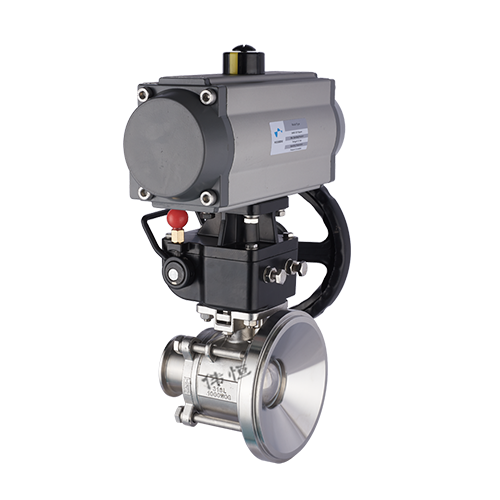
The Pneumatic Handwheel Two-Drive Tank Bottom Valve is designed to meet modern energy efficiency and sustainability standards:
Optimized Pneumatic Actuator: Reduces air consumption and operational cost.
Leak-Free Design: Minimizes energy loss due to leakage.
Durable Seals: Extend maintenance intervals, reducing downtime and energy usage.
Automation Ready: Compatible with industrial control systems for smart energy management.
Implementing these valves in industrial setups ensures compliance with energy efficiency regulations and reduces the overall carbon footprint of fluid control systems.
Verify that the tank bottom flange dimensions match the valve specifications.
Ensure the pneumatic system is operational and properly regulated.
Inspect seals and handwheel assembly for damage.
Positioning: Align the valve with the tank bottom flange.
Flange Bolting: Secure using appropriate bolts, washers, and torque specifications.
Pneumatic Connection: Attach air supply line to the actuator.
Signal Feedback Wiring: Connect sensors if installed.
Manual Check: Rotate handwheel to confirm free operation before applying pressure.
       Tank Outlet
           │
           │
      ┌───────────┐
      │   Valve   │ ← Pneumatic actuator + handwheel
      └───────────┘
           │
        Tank Drain
| Issue | Possible Cause | Solution |
|---|---|---|
| Valve not opening | Pneumatic actuator failure | Check air supply, actuator connections, or replace actuator |
| Manual operation difficult | Handwheel jammed or corrosion | Clean, lubricate, or replace handwheel components |
| Leakage at flange | Loose bolts or damaged gasket | Tighten bolts or replace flange gasket |
| Incomplete valve closure | Worn seat or debris | Inspect and replace valve seat, clean internal components |
| Signal feedback error | Wiring or sensor malfunction | Inspect wiring, recalibrate or replace sensor |
Proper maintenance routines ensure long-term reliability:
Weekly
Inspect pneumatic connections for leaks.
Rotate handwheel to ensure free movement.
Monthly
Check flange bolts for proper torque.
Inspect valve body and seals for corrosion or wear.
Quarterly
Lubricate moving parts as recommended by the manufacturer.
Test pneumatic actuation response and signal feedback (if installed).
Annually
Disassemble valve for a complete internal inspection.
Replace worn seals, gaskets, or components as needed.
To maintain valve performance before installation:
Environment: Store in a dry, temperature-controlled area.
Protection: Keep in original packaging to prevent dust, moisture, or mechanical damage.
Handling: Support valve body during lifting; avoid flange deformation.
Pre-Use Inspection: Check actuator, handwheel, and seals for damage or contamination.
The Pneumatic Handwheel Two-Drive Tank Bottom Valve is ideal for:
Chemical Plants: Safe drainage of corrosive liquids.
Water Treatment Facilities: Controlled discharge of process water.
Food & Beverage Industry: Hygienic and precise fluid handling.
Pharmaceutical Manufacturing: Leak-proof tank drainage in sterile processes.
Its dual-drive mechanism ensures reliable operation, even during power or pneumatic system failures, making it an excellent choice for critical applications.
The Pneumatic Handwheel Two-Drive Tank Bottom Valve offers versatility, reliability, and efficiency for industrial tank systems. Its stainless steel construction, leak-proof design, and dual-drive mechanism provide safe and uninterrupted operation. Proper installation, maintenance, and storage ensure long-term performance, while its energy-efficient design aligns with modern sustainability standards. This valve is the ideal solution for industries requiring precise, safe, and automated fluid control at tank bottoms.
Tel: +86 577 8699 9257
Tel: +86 135 8786 5766 /+86 137 32079372
Email: wzweiheng@163.com
Address:No. 1633, Yidaoba Road, Binhai Industrial Park, Wenzhou City, Zhejiang Province

Scan wechat
This website uses cookies to ensure you get the best experience on our website.
 Español
 Portugues
 Pусский
 Français
 Deutsch
 한국어
한국어 العربية
 Italiano
 ไทย
ไทย Türk dili
 हिन्दी
 Melayu
 Tiếng Việt
 dansk
dansk қазақ
қазақ বাংলা
বাংলা українська
 Filipino
 o'zbek



 Phone
Phone