

Insulated quick-release ball valve is a special valve that has the functions of heat preservation and quick loading and unloading. This valve is commonly used in fluid piping systems that require heat preservation, effectively reducing the heat loss of the medium and increasing the temperature and pressure of the fluid.
The structure of insulated quick-release ball valves is similar to that of ordinary ball valves, mainly composed of valve body, spool and seal. The difference is that the valve body of the insulated quick-release ball valve uses special insulation materials, which can effectively reduce the loss of heat in the medium. At the same time, the spool and seal of the insulated quick-release ball valve also use high-performance materials to ensure the sealing performance and service life of the valve.
When using insulated quick-release ball valves, you need to pay attention to the following points:
During the installation process, the correct direction and position of the valve should be ensured to avoid excessive external impact.
During operation, open the valve gradually to avoid sudden opening or closing that can cause damage to the valve.
Regularly inspect and maintain the valve to ensure the normal operation and sealing effect of the valve.
In conclusion, the insulated quick-release ball valve is a special valve with thermal insulation and quick loading and unloading functions, suitable for fluid piping systems that require insulation. It can effectively reduce the loss of heat in the medium, increase the temperature and pressure of the fluid, and also improve the service life and sealing performance of the valve.
| name | Insulation quick-release ball valve |
| It is called the path | DN15-DN200mm |
| Nominal pressure | 1.6Mpa (If you need other pressure standards, please specify when ordering) |
| Connection | Quick assembly, clamps, quick cards, chucks |
| Body material | Carbon Steel (C) Stainless Steel 304 (P) Stainless Steel 316 (R) |
| Surface treatment | Mirror polishing inside and outside |
| Sealed material | Teflon (PTFE), EPDM, Silicone Rubber (VMQ), Butadiene Rubber (NBR), Fluorinated Rubber (FPM), Metal Seals (H), Carbide (Y) |
| Use the medium | Gas, liquid, oil, vacuum, water vapor |
| Medium temperature | -20℃-150℃(F) 、 -20℃-250℃ (PPL) 、-29℃-425℃(H)(Y) |
| apply | This type of ball valve series is a hygienic type of valve series for material transfer control. It is widely used in food and beverage processing, as well as in the pharmaceutical and chemical industries |
| standard | DIN standard series, 3A standard series SMS standard series, ISO/IDF standard series, BS/RJT standard series, ASME/BPE, etc. (There are various standard valve series that can be provided to customers) |
| The components of ball valves generally include: | A handle, a ball with a through cavity, valve body, valve core and shaft seal |
Remark:
The body of the sanitary straight-through quick-loading ball valve can adopt: casting or forging process;
The forms are divided into: floating, fixed, and top-mounted;
Sealing is divided into: soft seal and hard seal;
Withstand pressure up to: 2000 lbs, temperature resistance down to -196C up to 570.
Other special sealing materials or special temperatures can also be designed and selected according to customer requirements.
| Model representation method | ||||||||||||
| WH | -600 | —Q1 | —C1 | —F | —16 | —P | —25 | —D1 | —B | —W2 | —B2 | —L |
| >1. Weiheng brand | >2. Drive mode | >3. Valve body type | >4. Connection method | >5. Sealing material | >6. Nominal pressure | >7. Valve body material | >8. Nominal diameter | >9. Control mode | >10. Explosion-proof level | —20~150℃ | >12. Accessory options | >13. Three flows |
| 1~7 mandatory options, 8~13 optional | ||||||||||||
| 1 codename | 5 codename | Sealed material | 10 code | Explosion-proof rating | |
| WH | Weiheng brand | F | PTFE | B | ExdIl BT4 Gb explosionproof and explosion-proof type |
| PPL | Para-polyphenylene | BZ | ExdllCT5 Gb explosion-proof and explosion-proof type | ||
| 2 codename | Drive mode | H | Metal hard seal | BC | Exdll CT6 Gb explosionproof and explosion-proof type |
| 600 | Pneumatic actuator series | Y | cemented carbide | BM | ExmbllT4 Gb cast explosion-proof type |
| 900 | Electric actuator system | X1 | Ding Qing rubber NBR | BA | Exiall CT6Ga intrinsically safe and explosion-proof |
| 2001 | Column plastic actuator angle seat valve series | X2 | Natural rubber NR | ||
| 2002 | Stainless steel actuator angle seat valve series | X3 | EPDM | 11 codenames | Medium temperature |
| X4 | Viton rubber FPM | W1 | -20-80C | ||
| 3 codename | Body type | X5 | Food grade silicone rubber SI | W2 | -20-150C |
| Q1 | Two-way valve | F46 | Fully lined polyperfluoroethylene FEP | W3 | -20-250C |
| Q2 | Three-way valve | PFA | Fully lined with soluble PTFE PFA | W4 | -29-425C |
| Q3 | Four-way valve | F4 | Fully lined PTFE | W5 | -29-650C |
| Q4 | Stationary ball valve | N | nylon | W6 | -196-60C |
| Q5 | V-ball | TC | Lined ceramic | ...... | ...... |
| Q6 | Low profile ball valve | J | Rubber lining | It has a special temperature that can be designed and manufactured according to customer requirements | |
| Q7 | Sanitary grade ball valves | PEEK | Polyether ether ketone | ||
| Q8 | Plastic ball valves | W | When the ring | 12 codenames | Accessory selection |
| Q9 | High Vacuum Ball Valve | ...... | ...... | B1 | 2-position, 3-way solenoid valve |
| Q10 | Fluorine ball valve in the whole village | Other special sealing materials can be designed and manufactured according to customer requirements | B2 | 2-position 5-way solenoid valve | |
| Q11 | Cryogenic ball valves | B3 | 2-position 3-way explosion-proof solenoid valve | ||
| Q12 | Insulated ball valve | 6 codename | Nominal pressure | B4 | 2-position 5-way explosion-proof solenoid valve |
| Q13 | Eccentric hemispherical valve | ...... | ...... | B5 | Filter pressure reducing valve |
| Q14 | Tank bottom valve | B6 | Limit switch | ||
| Q15 | Ceramic ball valves | 7 codename | Body material | B7 | Explosion-proof limit switch |
| D1 | Centerline soft-sealed butterfly valve | Q | Ductile iron HT200 | B8 | Hand manipulation mechanism |
| D2 | 3. Eccentric butterfly valve | C | carbon steel | B9 | Locator |
| D3 | Sanitary Butterfly Valve | P | Stainless steel 304 | ...... | ...... |
| D4 | Plastic butterfly valve | R | Stainless steel 316 | ||
| D5 | Ventilation butterfly valve | PL | Stainless steel 304L | 13 codenames | Three flows |
| D6 | Fluorine butterfly valve in the whole village | RL | Stainless steel 316L | L | Tee L-type BC switching |
| D7 | High vacuum butterfly valve | U | PVC UPVC | T1 | Tee T-type C-port switch |
| D8 | Powder butterfly valve | PP | Reinforced polypropylene RPP | T2 | Tee T-type AB switching |
| Z1 | Gate valve | L | Aluminum alloy | T3 | Tee T-type AC switching |
| Z2 | Knife gate valve | ...... | ...... | T4 | Tee T-type B-port switch |
| J1 | Globe valve | Other special valve body materials can be designed and manufactured according to customer requirements | |||
| J2 | Bellows cut stop valve | ||||
| J3 | Angle seat valve | 8 codename | It is called the path | ||
| F1 | Upward expansion discharge valve | ...... | ...... | ||
| F2 | Downward discharge valve | ||||
| Other special valve body materials can be designed and manufactured according to customer requirements | 9 code | Control mode | |||
| Z | Standard switch type | ||||
| 4 codenames | Connection | T1 | Integral switching type | ||
| C1 | Female thread | T2 | Overall adjustment | ||
| C2 | By order | T3 | RS485 bus type | ||
| C3 | Male thread | D1 | Double acting | ||
| C4 | flange | D2 | Double-acting adjustment type | ||
| C5 | KF vacuum chuck | E1 | Uni-acting normally closed | ||
| C6 | weld | E2 | Single-acting normally closed regulation type | ||
| C7 | Pair clip | E3 | Single-acting and always open | ||
| C8 | Clamps | E4 | Single-acting normally open adjustment type | ||
The Sanitary Insulation Quick-Release Ball Valve is a vital component in fluid control systems within industries that require high sanitary standards, such as food processing, pharmaceuticals, biotechnology, and cosmetics. This valve is designed to offer quick-release functionality for ease of installation and maintenance, while also featuring an insulated design that helps to maintain consistent temperatures during fluid transport.
This guide covers the design philosophy, maintenance and care, energy-saving standards, and operation process of the Sanitary Insulation Quick-Release Ball Valve, following Google SEO best practices to provide clear, concise, and informative content suitable for B2B platforms and company websites.
The Sanitary Insulation Quick-Release Ball Valve is engineered for efficient and hygienic fluid control in systems where temperature regulation, easy maintenance, and quick access are critical. With its insulated body, it maintains fluid temperature during transport, minimizing energy loss. The quick-release mechanism allows users to disconnect or replace the valve swiftly without the need for special tools or complex disassembly.
Material: 304 or 316L stainless steel, providing durability, corrosion resistance, and ease of cleaning.
Insulated Design: Helps maintain temperature control and reduces heat loss during fluid transfer, improving overall system efficiency.
Quick-Release Mechanism: Simplifies valve removal and installation for maintenance, reducing downtime and labor costs.
Sanitary Compliance: Meets FDA, 3A, and EHEDG standards for applications in the food, beverage, pharmaceutical, and biotech industries.
Leak-Proof: Offers reliable sealing with smooth internal surfaces to prevent contamination and leakage.
Pressure Rating: Handles pressures up to 10 bar (145 psi) with ease.
Temperature Rating: Operates effectively within the temperature range of -10°C to 150°C (14°F to 302°F).
The design of the Sanitary Insulation Quick-Release Ball Valve focuses on efficiency, hygiene, and ease of maintenance, incorporating innovative features to address the unique needs of the sanitary fluid control industry. The following key principles form the core design philosophy:
The valve is crafted with smooth internal surfaces that are easy to clean, preventing the build-up of bacteria or contaminants. The absence of pockets or grooves in the valve body ensures that no debris or fluid residues remain, meeting the highest standards for hygiene in industries like food processing and pharmaceuticals.
The insulated body ensures that fluids, especially those requiring precise temperature control, are maintained at optimal temperatures throughout the process. This feature is particularly beneficial in applications where energy efficiency is critical, such as dairy processing or cosmetic manufacturing.
Designed for efficiency, the quick-release feature allows for fast and tool-free disconnection of the valve from the system. This functionality reduces downtime during maintenance and cleaning, a crucial advantage in industries that require frequent system checks or product changeovers.
The use of 316L stainless steel ensures high corrosion resistance, making the valve suitable for harsh operating environments. The valve is built to withstand both extreme temperatures and pressures, providing long-term reliability in a variety of sanitary applications.
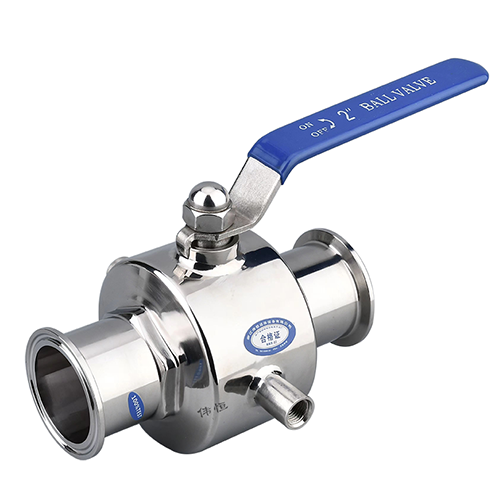
One of the standout features of the Sanitary Insulation Quick-Release Ball Valve is its insulated design, which contributes to energy efficiency. Below are some of the key energy-saving benefits that the valve offers:
By maintaining a stable temperature during fluid transfer, the valve helps prevent heat loss or gain, which can lead to energy inefficiency. This is particularly important for industries that handle heated liquids (e.g., milk processing) or chemicals that require precise temperature control.
The insulation around the valve minimizes the need for additional energy-consuming temperature regulation systems, resulting in lower heating and cooling costs. In food and beverage systems, for example, this energy savings translates into cost reductions and improved overall system efficiency.
By minimizing temperature fluctuations during the transfer of fluids, the valve contributes to the consistent quality of the end product. This is critical in processes where temperature impacts the chemical properties or flavor of the product.
The energy-saving capabilities of the Sanitary Insulation Quick-Release Ball Valve align with sustainability goals, making it a suitable choice for industries aiming to reduce their environmental impact. The valve helps companies meet both environmental regulations and green building standards by contributing to energy efficiency.
Proper operation of the Sanitary Insulation Quick-Release Ball Valve ensures its longevity, peak performance, and the safety of the system. Below are step-by-step operating instructions for this valve.
Ensure that the clamp connections are properly aligned with the piping system. Use a clamp tool to securely tighten the connections without over-tightening.
Check the insulated section to ensure there is no damage to the insulation material. Any physical damage can reduce the valve’s energy efficiency.
Ensure the valve body is oriented correctly for optimal flow direction.
On/Off Control: To operate the valve, use the handle or actuator to rotate the ball inside the valve. When the valve handle is aligned with the pipe, it is in the "open" position, allowing fluid to flow. When perpendicular, the valve is "closed" and blocks flow.
Quick-Release Operation: To disengage the valve for cleaning or maintenance, simply loosen the clamps to remove the valve without the need for specialized tools.
Cleaning-In-Place (CIP): If used in a system with CIP procedures, the valve can be cleaned without removal. Use food-grade sanitizers to clean the internal surfaces of the valve.
Manual Cleaning: For deeper cleaning, the valve can be removed from the piping system and thoroughly cleaned. Ensure that all components are free of any residues or contaminants.
Lubrication: Ensure that the quick-release mechanism and other moving parts are lubricated periodically with FDA-approved lubricants.
After installation and maintenance, test the valve to ensure it is functioning correctly:
Check for leaks by slowly increasing the pressure in the system.
Test the quick-release function to ensure smooth and easy removal of the valve.
Ensure the valve opens and closes easily without resistance.
To extend the lifespan of the Sanitary Insulation Quick-Release Ball Valve and ensure it operates at peak performance, regular maintenance is essential. Below are some maintenance recommendations:
Perform regular CIP (Clean-In-Place) procedures to prevent the buildup of bacteria, residues, or contaminants. If the valve cannot be cleaned in place, remove it for manual cleaning with appropriate sanitizers.
Check the seals and gaskets regularly for wear or damage. Replace seals as needed to prevent leaks and maintain a secure connection.
Lubricate moving parts like the quick-release mechanism to ensure smooth operation. Use only food-grade lubricants or those compliant with industry standards.
Inspect the valve's insulation for cracks or degradation, especially in high-temperature environments. Damaged insulation can reduce the valve's energy-saving capabilities.
Periodically test the valve for leaks and check its functionality, especially the quick-release mechanism. This will help identify any potential issues before they affect system performance.
While the Sanitary Insulation Quick-Release Ball Valve is designed for reliability, there are a few common issues that may arise. Below are some troubleshooting tips:
Cause: Loose or worn seals.
Solution: Tighten the clamps and replace any worn seals or gaskets.
Cause: Lack of lubrication or debris in the valve mechanism.
Solution: Clean the valve and lubricate the moving parts.
Cause: Physical damage during installation or cleaning.
Solution: Replace the damaged insulation and ensure proper handling in the future.
The Sanitary Insulation Quick-Release Ball Valve is a highly effective solution for fluid control in sanitary applications, offering easy maintenance, hygienic design, and energy-saving benefits. With its insulated body to maintain fluid temperatures, quick-release mechanism for rapid disconnection, and compliance with sanitary standards, it is an ideal choice for industries such as food processing, pharmaceuticals, and biotechnology. By following proper operation and maintenance guidelines, users can maximize the valve's lifespan and ensure optimal performance.
Tel: +86 577 8699 9257
Tel: +86 135 8786 5766 /+86 137 32079372
Email: wzweiheng@163.com
Address:No. 1633, Yidaoba Road, Binhai Industrial Park, Wenzhou City, Zhejiang Province

Scan wechat
This website uses cookies to ensure you get the best experience on our website.
 Español
 Portugues
 Pусский
 Français
 Deutsch
 한국어
한국어 العربية
 Italiano
 ไทย
ไทย Türk dili
 हिन्दी
 Melayu
 Tiếng Việt
 dansk
dansk қазақ
қазақ বাংলা
বাংলা українська
 Filipino
 o'zbek



 Phone
Phone