

A Tank Bottom Diaphragm Valve is a special valve that is typically used at the bottom of the tank to control and regulate the flow of liquids. This valve consists of a diaphragm and a stem that can be moved up and down to open or close the port.
The characteristic of tank bottom diaphragm valves lies in the choice of diaphragm materials, usually using corrosion-resistant and wear-resistant materials such as stainless steel, PTFE, etc. This material can ensure that the valve has good sealing performance and a long service life during use.
In addition, the design of the tank bottom diaphragm valve also fully considers the characteristics of fluid flow, which can effectively prevent the retention and deposition of the medium at the valve mouth, thereby ensuring the purity and fluidity of the medium.
The tank bottom diaphragm valve is an efficient and reliable valve suitable for various applications that require high sealing performance and high flow. It can effectively control the flow and direction of the medium, and has a long service life and low maintenance costs.
| Model representation method | ||||||||||||
| WH | -600 | —Q1 | —C1 | —F | —16 | —P | —25 | —D1 | —B | —W2 | —B2 | —L |
| >1. Weiheng brand | >2. Drive mode | >3. Valve body type | >4. Connection method | >5. Sealing material | >6. Nominal pressure | >7. Valve body material | >8. Nominal diameter | >9. Control mode | >10. Explosion-proof level | —20~150℃ | >12. Accessory options | >13. Three flows |
| 1~7 mandatory options, 8~13 optional | ||||||||||||
| 1 codename | 5 codename | Sealed material | 10 code | Explosion-proof rating | |
| WH | Weiheng brand | F | PTFE | B | ExdIl BT4 Gb explosionproof and explosion-proof type |
| PPL | Para-polyphenylene | BZ | ExdllCT5 Gb explosion-proof and explosion-proof type | ||
| 2 codename | Drive mode | H | Metal hard seal | BC | Exdll CT6 Gb explosionproof and explosion-proof type |
| 600 | Pneumatic actuator series | Y | cemented carbide | BM | ExmbllT4 Gb cast explosion-proof type |
| 900 | Electric actuator system | X1 | Ding Qing rubber NBR | BA | Exiall CT6Ga intrinsically safe and explosion-proof |
| 2001 | Column plastic actuator angle seat valve series | X2 | Natural rubber NR | ||
| 2002 | Stainless steel actuator angle seat valve series | X3 | EPDM | 11 codenames | Medium temperature |
| X4 | Viton rubber FPM | W1 | -20-80C | ||
| 3 codename | Body type | X5 | Food grade silicone rubber SI | W2 | -20-150C |
| Q1 | Two-way valve | F46 | Fully lined polyperfluoroethylene FEP | W3 | -20-250C |
| Q2 | Three-way valve | PFA | Fully lined with soluble PTFE PFA | W4 | -29-425C |
| Q3 | Four-way valve | F4 | Fully lined PTFE | W5 | -29-650C |
| Q4 | Stationary ball valve | N | nylon | W6 | -196-60C |
| Q5 | V-ball | TC | Lined ceramic | ...... | ...... |
| Q6 | Low profile ball valve | J | Rubber lining | It has a special temperature that can be designed and manufactured according to customer requirements | |
| Q7 | Sanitary grade ball valves | PEEK | Polyether ether ketone | ||
| Q8 | Plastic ball valves | W | When the ring | 12 codenames | Accessory selection |
| Q9 | High Vacuum Ball Valve | ...... | ...... | B1 | 2-position, 3-way solenoid valve |
| Q10 | Fluorine ball valve in the whole village | Other special sealing materials can be designed and manufactured according to customer requirements | B2 | 2-position 5-way solenoid valve | |
| Q11 | Cryogenic ball valves | B3 | 2-position 3-way explosion-proof solenoid valve | ||
| Q12 | Insulated ball valve | 6 codename | Nominal pressure | B4 | 2-position 5-way explosion-proof solenoid valve |
| Q13 | Eccentric hemispherical valve | ...... | ...... | B5 | Filter pressure reducing valve |
| Q14 | Tank bottom valve | B6 | Limit switch | ||
| Q15 | Ceramic ball valves | 7 codename | Body material | B7 | Explosion-proof limit switch |
| D1 | Centerline soft-sealed butterfly valve | Q | Ductile iron HT200 | B8 | Hand manipulation mechanism |
| D2 | 3. Eccentric butterfly valve | C | carbon steel | B9 | Locator |
| D3 | Sanitary Butterfly Valve | P | Stainless steel 304 | ...... | ...... |
| D4 | Plastic butterfly valve | R | Stainless steel 316 | ||
| D5 | Ventilation butterfly valve | PL | Stainless steel 304L | 13 codenames | Three flows |
| D6 | Fluorine butterfly valve in the whole village | RL | Stainless steel 316L | L | Tee L-type BC switching |
| D7 | High vacuum butterfly valve | U | PVC UPVC | T1 | Tee T-type C-port switch |
| D8 | Powder butterfly valve | PP | Reinforced polypropylene RPP | T2 | Tee T-type AB switching |
| Z1 | Gate valve | L | Aluminum alloy | T3 | Tee T-type AC switching |
| Z2 | Knife gate valve | ...... | ...... | T4 | Tee T-type B-port switch |
| J1 | Globe valve | Other special valve body materials can be designed and manufactured according to customer requirements | |||
| J2 | Bellows cut stop valve | ||||
| J3 | Angle seat valve | 8 codename | It is called the path | ||
| F1 | Upward expansion discharge valve | ...... | ...... | ||
| F2 | Downward discharge valve | ||||
| Other special valve body materials can be designed and manufactured according to customer requirements | 9 code | Control mode | |||
| Z | Standard switch type | ||||
| 4 codenames | Connection | T1 | Integral switching type | ||
| C1 | Female thread | T2 | Overall adjustment | ||
| C2 | By order | T3 | RS485 bus type | ||
| C3 | Male thread | D1 | Double acting | ||
| C4 | flange | D2 | Double-acting adjustment type | ||
| C5 | KF vacuum chuck | E1 | Uni-acting normally closed | ||
| C6 | weld | E2 | Single-acting normally closed regulation type | ||
| C7 | Pair clip | E3 | Single-acting and always open | ||
| C8 | Clamps | E4 | Single-acting normally open adjustment type | ||
The Sanitary Tank Bottom Diaphragm Valve is an essential component in industries that require hygienic fluid control and efficient discharge systems. Widely used in food and beverage, pharmaceutical, and biotech industries, this valve is designed to provide precise control over liquid flow while maintaining high sanitary standards. Featuring a diaphragm-based mechanism, this valve minimizes the risk of contamination by isolating the fluid from internal components.
This guide covers usage recommendations, important considerations, specifications, and installation steps for the Sanitary Tank Bottom Diaphragm Valve, ensuring you get the best performance out of this key equipment. Whether you're a procurement manager, process engineer, or maintenance professional, this guide will provide you with the essential information to optimize your valve's operation.
The Sanitary Tank Bottom Diaphragm Valve is engineered to regulate fluid flow at the bottom of storage tanks, reactors, and other vessels. This valve is particularly important in systems where hygiene and contamination control are crucial. Its diaphragm design ensures minimal contact between the fluid and the valve mechanism, reducing the potential for contamination.
Diaphragm Construction: The diaphragm isolates the fluid from the valve's mechanical parts, making it perfect for sanitary applications.
Tank Bottom Installation: Facilitates easy draining and discharge of fluids, especially in tanks or reactors.
Corrosion Resistance: Constructed from high-quality stainless steel (304 or 316L), the valve offers excellent resistance to corrosion and chemical damage.
Compliance with Sanitary Standards: Meets FDA, 3A, and EHEDG standards for hygienic applications in industries that require strict sanitary conditions.
Leak-Proof Performance: Provides a secure seal, preventing leaks and ensuring fluid containment during operation.
Food and Beverage Industry: Controls the flow of liquids such as milk, juice, and syrups while ensuring product purity.
Pharmaceutical Industry: Manages the discharge of pharmaceutical ingredients and chemicals, maintaining a contamination-free environment.
Biotechnology: Used in bioreactors and fermenters to control fluid flow while maintaining sterility.
Chemical Processing: Ideal for managing aggressive fluids and preventing contamination in processing systems.
To ensure optimal performance and longevity of the Sanitary Tank Bottom Diaphragm Valve, here are some recommended usage practices:
Fluid Type Compatibility: Ensure that the materials used in the valve body, diaphragm, and seals are compatible with the fluid being processed. Common diaphragm materials include EPDM, PTFE, and NBR.
Operating Pressure: Verify that the fluid pressure does not exceed the valve's rated pressure limits to avoid damage to the diaphragm or valve mechanism.
Check for Leaks: Periodically inspect the valve for leaks, particularly around the diaphragm and flange connections. Leaks can indicate a worn diaphragm or improperly tightened connections.
Inspect Seals and Gaskets: Regularly check seals and gaskets for signs of wear. Damaged seals should be replaced to maintain the valve's leak-proof performance.
Regular Cleaning: Clean the valve according to the manufacturer's instructions using food-grade cleaning agents. For highly sensitive applications, ensure the valve is sterilized regularly to prevent contamination.
Sanitary Cleaning Systems: For systems that require frequent cleaning, consider integrating the valve into a CIP (Clean-In-Place) system to automate the cleaning process.
Avoid Physical Shock: Handle the valve with care during installation and maintenance. Avoid dropping or subjecting it to mechanical shock, which could damage the diaphragm or seals.
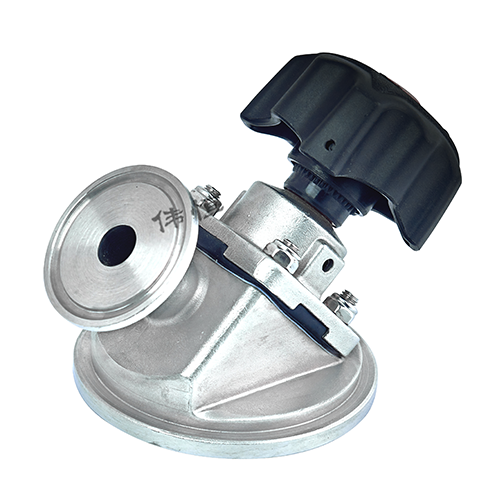
Before installing the Sanitary Tank Bottom Diaphragm Valve, there are several factors to consider to ensure that the valve functions correctly and efficiently:
Valve Size: Choose the correct valve size based on the pipe diameter and flow requirements of the system. An incorrectly sized valve may lead to poor performance or system inefficiencies.
End Connections: Verify the type of end connections required (e.g., flanged, tri-clamp, or threaded) and ensure they match the piping system for proper integration.
Ensure that the valve’s pressure rating and temperature tolerance are suitable for your application. Exceeding these limits can cause damage to the diaphragm and seals, leading to leaks and failure.
The maximum temperature typically ranges from -10°C to 150°C (14°F to 302°F), but check the manufacturer's guidelines for exact specifications.
Tank Bottom Placement: When installing, position the valve at the tank’s bottom to ensure it can efficiently drain and discharge fluids. The valve should be oriented with the correct flow direction, as indicated on the valve body.
Accessibility: Ensure that the valve is easily accessible for maintenance and cleaning, especially in systems where frequent disassembly is required.
Below is a table with key technical specifications for the Sanitary Tank Bottom Diaphragm Valve, which will help you select the appropriate valve for your system:
| Feature | Specification |
|---|---|
| Material | Stainless Steel (304 or 316L) |
| Diaphragm Material | EPDM, PTFE, NBR |
| Temperature Range | -10°C to 150°C (14°F to 302°F) |
| Pressure Range | 0-10 bar (0-145 psi) |
| Connection Type | Flanged, Tri-Clamp, Threaded |
| Size Range | 1" to 6" |
| Compliance | FDA, 3A, EHEDG, ISO 9001 |
These specifications ensure that the valve is durable, reliable, and compliant with the strict hygiene and safety standards of industries such as food processing and pharmaceuticals.
Proper installation is essential to ensuring the Sanitary Tank Bottom Diaphragm Valve performs efficiently and lasts for many years. Below is a step-by-step guide to installing the valve:
Clean the Area: Before installation, ensure that the valve and pipe connections are clean and free of debris.
Check Piping: Ensure that the pipes leading to the valve are properly aligned and free of any obstructions.
Position the Valve: Position the valve at the bottom of the tank, ensuring that the flow direction matches the indicator arrow on the valve body.
Install the Flange or Connection: Attach the valve to the tank's pipe using the appropriate connection type (flanged, tri-clamp, or threaded). Tighten the bolts or screws to secure the valve in place, ensuring that the connection is leak-proof.
Ensure Proper Alignment: Make sure the valve is aligned with the piping system to avoid stress on the valve body during operation.
Tighten Bolts Evenly: Tighten all flange bolts or screws evenly to ensure a secure, leak-proof seal.
Check for Leaks: After installation, perform a pressure test to check for any leaks around the valve or pipe connections. If leaks are found, re-tighten the connections or replace any damaged seals.
Test Valve Operation: Operate the valve to ensure smooth opening and closing. Verify that the valve performs as expected in regulating fluid flow.
Customer feedback plays a crucial role in understanding the long-term performance and reliability of a product. Below are some customer reviews of the Sanitary Tank Bottom Diaphragm Valve:
"Great for Pharmaceutical Applications": A customer from the pharmaceutical industry shared, "This valve works perfectly in our reactors, keeping our processes sanitary and efficient. We appreciate its durability and the ease of cleaning."
"Reliable and Easy to Maintain": A food processing company said, "We’ve used this valve in several of our production lines, and it’s been very reliable. The valve is easy to clean and maintain, which is essential in our industry."
"Installation Can Be Challenging": Some users mentioned that the installation process required careful alignment and adjustment, especially when integrating it into existing systems. "Once it’s installed properly, it works great, but getting it set up took a bit more time than expected."
"Expensive for Small-Scale Operations": A few small-scale operations noted that while the valve is excellent in performance, the cost may be a concern for smaller businesses.
The Sanitary Tank Bottom Diaphragm Valve is a highly reliable and essential tool for industries that require precise fluid control in hygienic environments. Its diaphragm design, tank bottom installation, and corrosion-resistant construction make it ideal for food processing, pharmaceuticals, biotechnology, and other sensitive applications.
By following the installation guidelines, maintenance tips, and troubleshooting procedures outlined in this guide, you can ensure that the valve operates efficiently and remains in optimal condition throughout its lifecycle. The valve’s sanitary design, combined with its durability and easy maintenance, makes it a long-term investment in fluid control.
This article is structured with SEO optimization in mind, providing clear headings, relevant keywords, and professional content that is both informative and actionable. Whether you're looking to purchase, install, or maintain the Sanitary Tank Bottom Diaphragm Valve, this guide will serve as a valuable resource for engineers, procurement professionals, and maintenance teams.
 RELATED
 RELATED
Tel: +86 577 8699 9257
Tel: +86 135 8786 5766 /+86 137 32079372
Email: wzweiheng@163.com
Address:No. 1633, Yidaoba Road, Binhai Industrial Park, Wenzhou City, Zhejiang Province

Scan wechat
This website uses cookies to ensure you get the best experience on our website.
 Español
 Portugues
 Pусский
 Français
 Deutsch
 한국어
한국어 العربية
 Italiano
 ไทย
ไทย Türk dili
 हिन्दी
 Melayu
 Tiếng Việt
 dansk
dansk қазақ
қазақ বাংলা
বাংলা українська
 Filipino
 o'zbek



 Phone
Phone