

How to Choose Sanitary Pipe Fittings for Food and Beverage Systems
Operating Procedures | User Guide | Product Certifications | Operation Tips
Sanitary pipe fittings are essential components in food and beverage processing systems. They ensure hygienic fluid transfer, prevent contamination, and maintain product quality throughout pipelines. Selecting the right fittings requires consideration of material quality, surface finish, connection types, pressure ratings, and regulatory compliance. This guide provides a detailed approach to choosing sanitary pipe fittings, ensuring optimal performance, safety, and reliability in food and beverage operations.
Sanitary pipe fittings connect pipelines and equipment in hygienic systems, including beverage, dairy, juice, brewing, and pharmaceutical production. High-quality fittings help:
Prevent microbial contamination
Support CIP (Clean-in-Place) and SIP (Steam-in-Place) cleaning
Ensure smooth fluid flow and reduce energy consumption
Comply with food safety and industry standards
Materials commonly used include 304 stainless steel for general applications and 316L stainless steel for highly corrosive or high-purity processes.
Correct operation of sanitary fittings ensures durability, leak-free performance, and hygienic standards.
Follow these steps for proper installation:
Inspection – Check fittings for visible damage, burrs, or debris.
Cleaning – Rinse with sanitized water to remove dust or protective oils.
Alignment – Position ferrules, clamps, or welded ends accurately to prevent stress.
Gasket Installation – Use the correct gasket material, ensuring no twisting.
Clamp Tightening – Apply recommended torque evenly to prevent leaks.
Testing – Perform hydrostatic or pneumatic testing to confirm integrity.
Always operate fittings within rated temperature and pressure ranges
Avoid sudden pressure surges or mechanical shocks
Fully open or fully close valves connected to the fittings during flow control
Monitor flow and pressure to detect early signs of leakage
Conduct regular CIP/SIP cleaning cycles to maintain hygiene
Verify compatibility of gasket materials with cleaning chemicals
Rinse thoroughly after each cleaning cycle to remove chemical residues
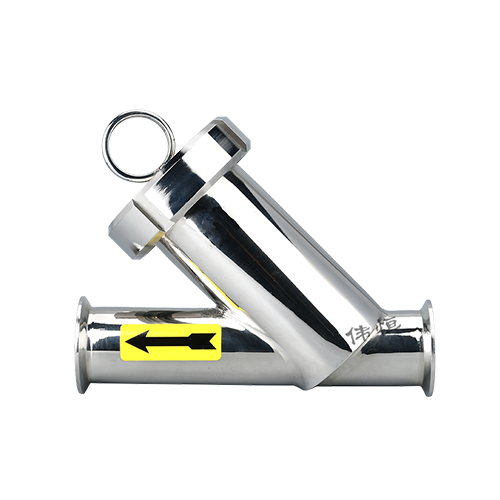
Choosing the correct sanitary fittings depends on application requirements, system design, and hygiene standards.
| Material | Characteristics | Recommended Applications |
|---|---|---|
| 304 Stainless Steel | Good corrosion resistance, cost-effective | General food and beverage pipelines |
| 316L Stainless Steel | Excellent corrosion resistance, ideal for acidic or high-purity fluids | Dairy, juice, pharmaceutical, and high-acid beverages |
| Plastic (PVC/PP) | Lightweight, chemical-resistant | Low-temperature non-alcoholic beverage lines (limited use) |
Tri-Clamp / Tri-Clover – Easy assembly/disassembly for cleaning; widely used in dairy and beverage systems
Welded Ferrule – Provides permanent, hygienic connections; ideal for high-pressure pipelines
Threaded Connections – Limited use; only suitable for low-pressure, non-critical applications
EPDM – Suitable for hot water and steam cleaning; food-grade
PTFE – Chemically resistant; ideal for acidic fluids
Viton – High-temperature and chemical resistance
Polished surfaces with Ra 0.4–0.8 µm reduce microbial adhesion
Mirror-finished fittings are preferred for CIP systems
Selecting certified fittings ensures food safety and regulatory compliance.
| Certification | Purpose | Industry Relevance |
|---|---|---|
| FDA Compliance | Ensures materials are safe for food contact | Required for food and beverage systems in the USA |
| 3A Sanitary Standards | Promotes hygienic design in dairy processing | Widely used in dairy and beverage industries |
| EHEDG Guidelines | European hygienic engineering standards | Ensures compatibility with CIP/SIP and prevents contamination |
| ISO 9001 / ISO 22000 | Quality management and food safety standards | Ensures reliable manufacturing processes |
Certified materials reduce risk of contamination
Compliance ensures suitability for regulatory inspections
Certified fittings often have better traceability and quality assurance
To maximize performance and lifespan of sanitary pipe fittings, follow these operational tips:
Store in a dry, ventilated environment
Protect ends with caps to prevent dust and scratches
Avoid stacking heavy items on fittings
Align pipeline components carefully to prevent stress on connections
Use recommended torque settings to prevent gasket deformation
Ensure compatibility with existing system components
Inspect fittings monthly for wear, corrosion, or leaks
Replace gaskets and seals every 6–12 months depending on usage
Record maintenance activities as part of quality management systems
Follow CIP/SIP protocols to prevent bacterial growth
Verify that cleaning chemicals are compatible with gasket and seal materials
Rinse thoroughly after chemical exposure to prevent flavor contamination
Even high-quality fittings may experience operational issues if not handled correctly.
| Problem | Cause | Solution |
|---|---|---|
| Leakage | Misaligned fittings, damaged gasket | Realign, replace gasket, retest system |
| Corrosion | Exposure to incompatible chemicals | Switch to 316L stainless steel, review cleaning agents |
| Reduced Flow | Blocked or clogged fittings | Disassemble and clean internal surfaces |
| Gasket Failure | Chemical attack or improper installation | Replace with suitable gasket material, follow torque guidelines |
| Joint Separation | Loose clamps or improper assembly | Reinstall and tighten clamps to recommended torque |
Preventive measures:
Schedule regular inspections and maintenance
Conduct periodic pressure testing
Ensure operators are trained in proper installation and cleaning procedures
Client: Medium-scale juice processing facility
Objective: Upgrade pipelines for hygienic and efficient operation
Solution: Installed 316L stainless steel tri-clamp sanitary pipe fittings with EPDM gaskets
Outcome:
Leak-free performance for 2 years
Reduced cleaning time by 25% due to mirror-polished surfaces
Minimized downtime and maintenance costs
Compliant with FDA and 3A standards
This demonstrates how proper selection and installation of sanitary pipe fittings optimize hygiene, efficiency, and product quality.
Choosing the right sanitary pipe fittings is vital for maintaining hygiene, efficiency, and safety in food and beverage systems. By considering material type, surface finish, connection type, gasket compatibility, and certifications, manufacturers can ensure reliable performance and regulatory compliance.
Following operating procedures, maintenance schedules, and cleaning protocols extends the lifespan of fittings while preventing contamination and reducing downtime. Certified, high-quality sanitary fittings are a key investment for plant engineers, procurement teams, and quality managers in food, beverage, dairy, and pharmaceutical industries.
Tel: +86 577 8699 9257
Tel: +86 135 8786 5766 /+86 137 32079372
Email: wzweiheng@163.com
Address:No. 1633, Yidaoba Road, Binhai Industrial Park, Wenzhou City, Zhejiang Province

Scan wechat
This website uses cookies to ensure you get the best experience on our website.
 Español
 Portugues
 Pусский
 Français
 Deutsch
 한국어
한국어 العربية
 Italiano
 ไทย
ไทย Türk dili
 हिन्दी
 Melayu
 Tiếng Việt
 dansk
dansk қазақ
қазақ বাংলা
বাংলা українська
 Filipino
 o'zbek



 Phone
Phone
Comment
(0)