

How to Choose the Right Sanitary Ball Valve for Dairy Applications
Comprehensive Operating Instructions, Application Fields, Product Uses, and User Insights
Sanitary ball valves are essential flow-control components used throughout modern dairy processing systems. From milk collection to pasteurization, homogenization, fermentation, and packaging, hygienic ball valves help ensure safe, efficient, and contamination-free fluid handling. Selecting the right sanitary ball valve is critical to maintaining product quality, optimizing production efficiency, and ensuring long-term operational reliability in dairy environments.
This guide provides a detailed overview of how to select the right sanitary ball valve for dairy applications, including operating instructions, user feedback, application industries, and key product uses.
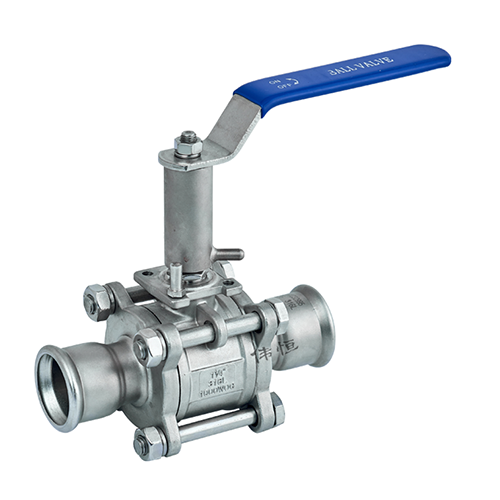
Dairy production requires consistent, hygienic, and regulated fluid control. Sanitary ball valves are designed with smooth internal surfaces, quick-acting shutoff capability, and food-grade materials that resist corrosion, bacteria buildup, and chemical attack from CIP/SIP cleaning procedures.
A typical sanitary ball valve includes:
Stainless steel valve body (304 or 316L)
Food-grade seals and seats
Full-port design for unobstructed product flow
Polished internal surfaces for high cleanability
Clamp, weld, or threaded connections
Their ability to provide reliable shutoff and low pressure drop makes them ideal for liquid milk, cream, whey, flavored beverages, condensed milk, and other dairy products.
Choosing the right valve depends on both hygienic and operational requirements.
| Material | Characteristics | Dairy Suitability |
|---|---|---|
| 304 Stainless Steel | Economical, general-purpose | Suitable for basic dairy processes |
| 316L Stainless Steel | Higher corrosion resistance, lower carbon, ideal for acidic CIP agents | Best for modern dairy plants |
316L is recommended for most dairy applications due to its superior resistance to chlorides and cleaning chemicals.
Dairy environments require high-temperature and chemical-resistant seals:
PTFE: Highly resistant to chemicals; ideal for CIP/SIP
EPDM: Excellent heat resistance
Viton: Suitable for oily or fatty dairy products
Silicone: Suitable for low-temperature environments
Choose according to application:
| Valve Design | Main Benefit | Dairy Application |
|---|---|---|
| Full-port Ball Valve | Maximum flow, minimal pressure drop | Milk transfer, cream pipelines |
| Encapsulated Seat Ball Valve | Prevents product trapping | Cheese whey, yogurt production |
| Cavity-filled Ball Valve | Eliminates dead zones | Sterile or ultra-clean applications |
The choice of connection impacts cleaning and maintenance:
Tri-Clamp: Best for frequent removal and cleaning
Welded: Ultra-clean, leak-free, ideal for fixed pipelines
Threaded: Rarely used in dairy due to hygiene limitations
Dairy valves should meet global safety standards:
3A Sanitary Standard
FDA Food Contact Requirements
EHEDG Hygienic Design Guidelines
Sanitary ball valves are widely used across all stages of dairy processing systems. Their hygienic design makes them suitable for applications requiring strict microbial control.
Milk reception tanks
Cooling lines
Transfer pumps
Ball valves provide reliable shutoff during sampling, filtering, and tank-to-tank transfer.
High-temperature short-time (HTST) systems
Holding tubes
Heat exchangers
Sanitary ball valves withstand temperature shocks and maintain sealing integrity.
Cream standardization systems
Fat adjustment
Flavor and sweetener blending
The full-port design prevents shear stress on product texture.
Yogurt fermentation tanks
Probiotic drinks
Dairy desserts
Encapsulated seat ball valves prevent media contamination.
UHT filling lines
Butter and cheese pipelines
Cleaning skids
Ball valves are easy to automate for efficient cleaning cycles.
Sanitary ball valves support critical operations throughout dairy facilities. Their design makes them suitable for a variety of tasks:
Ball valves provide quick shutoff to isolate pipelines during maintenance or process changes.
They ensure controlled flow at the bottom of milk tanks, cream tanks, and mixing vessels.
Automated valves regulate ingredient addition for flavored milk, chocolate milk, and dietary formulations.
Sanitary ball valves withstand:
High-temp steam
Chemical detergents
Pressure fluctuations
The cavity-filled design eliminates product entrapment and microbial accumulation.
Proper valve operation ensures long service life and improved hygiene performance.
Perform the following checks:
Confirm the correct valve size and model
Ensure seals and internal parts are clean
Verify pipeline pressure and temperature compatibility
Check actuator operation (for automated valves)
Turn the handle slowly or activate the actuator
Avoid sudden opening to prevent product splashing or water hammer
Verify that the valve handle aligns with the flow direction
Close slowly to avoid internal pressure spikes
Ensure the valve fully seats to prevent leakage
For pneumatic units, monitor air supply pressure
Ensure seals are compatible with chemicals and temperature
Maintain stable cleaning fluid flow
Avoid exposing the valve to rapid temperature changes
Verify complete valve movement for full cleaning coverage
Rinse the valve to remove residual cleaning chemicals
Inspect for leakage or abnormal wear
Record operating data if required for production traceability
Proper installation enhances hygiene, safety, and valve performance.
Clean, dry, and dust-free area
Pipes must be aligned to prevent mechanical stress
Adequate space for manual operation or actuator mounting
Check valve orientation
Align the valve with the direction of product flow.
Insert sealing gaskets
Ensure they are centered for leak-free performance.
Mount tri-clamp or weld ends
Tighten uniformly to avoid distortion.
Connect actuator (if applicable)
Install air supply lines
Set initial calibration
Test open/close cycles
Perform pressure test
Inspect for leaks at all connections.
Perform CIP/SIP sanitization
Fully clean and sterilize before the first production run.
Feedback from dairy producers helps highlight the real-world performance of sanitary ball valves.
High reliability: Users report stable shutoff during milk transfer and cream processing.
Easy cleaning: Full-port internal surfaces allow rapid CIP rinsing.
Durable seals: PTFE and EPDM seals withstand long-term chemical exposure.
Smooth operation: Manual and automated units perform consistently with minimal torque.
Some users prefer welded ends for ultra-sterile environments.
High-viscosity dairy products may require cavity-filled seats to prevent residue buildup.
Automated systems require regular actuator calibration.
| Feedback Category | Satisfaction Level | Notes |
|---|---|---|
| Hygiene Performance | ★★★★★ | Excellent for dairy pipelines |
| Durability | ★★★★☆ | Long service life under CIP/SIP |
| Ease of Installation | ★★★★★ | Ideal with tri-clamp connections |
| Flow Control Efficiency | ★★★★☆ | Smooth flow with low pressure drop |
Selecting the right valve ensures multiple advantages for dairy production:
Enhanced product safety
Reduced contamination risk
Faster cleaning cycles
Lower maintenance costs
Improved processing efficiency
Longer equipment lifespan
Choosing the right sanitary ball valve for dairy applications is essential for maintaining hygiene standards, ensuring product quality, and optimizing overall production efficiency. By understanding key selection factors such as material, sealing options, design features, and compliance standards—and by following proper installation and operation guidelines—dairy plants can significantly improve system reliability and reduce downtime.
This comprehensive guide serves as a professional reference for dairy engineers, equipment buyers, maintenance teams, and processing specialists looking to enhance their hygienic pipeline systems using high-quality sanitary ball valves.
Tel: +86 577 8699 9257
Tel: +86 135 8786 5766 /+86 137 32079372
Email: wzweiheng@163.com
Address:No. 1633, Yidaoba Road, Binhai Industrial Park, Wenzhou City, Zhejiang Province

Scan wechat
This website uses cookies to ensure you get the best experience on our website.
 Español
 Portugues
 Pусский
 Français
 Deutsch
 한국어
한국어 العربية
 Italiano
 ไทย
ไทย Türk dili
 हिन्दी
 Melayu
 Tiếng Việt
 dansk
dansk қазақ
қазақ বাংলা
বাংলা українська
 Filipino
 o'zbek



 Phone
Phone
Comment
(0)