

The Sanitary Electric Tank Bottom Quick Release Ball Valve is a valve designed for sanitary piping systems, featuring electric control and quick installation.
This valve meets the requirements of sanitary piping systems, with a smooth surface and a design with no dead ends, making it easy to clean and disinfect, effectively preventing media residue and bacterial growth.
At the same time, the sanitary electric tank bottom quick-release ball valve adopts electric control, which can control the opening and closing of the valve through electrical signals to achieve automatic control. These valves are suitable for Hygienic Piping Systems in the pharmaceutical, food, biotechnology sectors and meet high hygiene requirements
| Model representation method | ||||||||||||
| WH | -600 | —Q1 | —C1 | —F | —16 | —P | —25 | —D1 | —B | —W2 | —B2 | —L |
| >1. Weiheng brand | >2. Drive mode | >3. Valve body type | >4. Connection method | >5. Sealing material | >6. Nominal pressure | >7. Valve body material | >8. Nominal diameter | >9. Control mode | >10. Explosion-proof level | —20~150℃ | >12. Accessory options | >13. Three flows |
| 1~7 mandatory options, 8~13 optional | ||||||||||||
| 1 codename | 5 codename | Sealed material | 10 code | Explosion-proof rating | |
| WH | Weiheng brand | F | PTFE | B | ExdIl BT4 Gb explosionproof and explosion-proof type |
| PPL | Para-polyphenylene | BZ | ExdllCT5 Gb explosion-proof and explosion-proof type | ||
| 2 codename | Drive mode | H | Metal hard seal | BC | Exdll CT6 Gb explosionproof and explosion-proof type |
| 600 | Pneumatic actuator series | Y | cemented carbide | BM | ExmbllT4 Gb cast explosion-proof type |
| 900 | Electric actuator system | X1 | Ding Qing rubber NBR | BA | Exiall CT6Ga intrinsically safe and explosion-proof |
| 2001 | Column plastic actuator angle seat valve series | X2 | Natural rubber NR | ||
| 2002 | Stainless steel actuator angle seat valve series | X3 | EPDM | 11 codenames | Medium temperature |
| X4 | Viton rubber FPM | W1 | -20-80C | ||
| 3 codename | Body type | X5 | Food grade silicone rubber SI | W2 | -20-150C |
| Q1 | Two-way valve | F46 | Fully lined polyperfluoroethylene FEP | W3 | -20-250C |
| Q2 | Three-way valve | PFA | Fully lined with soluble PTFE PFA | W4 | -29-425C |
| Q3 | Four-way valve | F4 | Fully lined PTFE | W5 | -29-650C |
| Q4 | Stationary ball valve | N | nylon | W6 | -196-60C |
| Q5 | V-ball | TC | Lined ceramic | ...... | ...... |
| Q6 | Low profile ball valve | J | Rubber lining | It has a special temperature that can be designed and manufactured according to customer requirements | |
| Q7 | Sanitary grade ball valves | PEEK | Polyether ether ketone | ||
| Q8 | Plastic ball valves | W | When the ring | 12 codenames | Accessory selection |
| Q9 | High Vacuum Ball Valve | ...... | ...... | B1 | 2-position, 3-way solenoid valve |
| Q10 | Fluorine ball valve in the whole village | Other special sealing materials can be designed and manufactured according to customer requirements | B2 | 2-position 5-way solenoid valve | |
| Q11 | Cryogenic ball valves | B3 | 2-position 3-way explosion-proof solenoid valve | ||
| Q12 | Insulated ball valve | 6 codename | Nominal pressure | B4 | 2-position 5-way explosion-proof solenoid valve |
| Q13 | Eccentric hemispherical valve | ...... | ...... | B5 | Filter pressure reducing valve |
| Q14 | Tank bottom valve | B6 | Limit switch | ||
| Q15 | Ceramic ball valves | 7 codename | Body material | B7 | Explosion-proof limit switch |
| D1 | Centerline soft-sealed butterfly valve | Q | Ductile iron HT200 | B8 | Hand manipulation mechanism |
| D2 | 3. Eccentric butterfly valve | C | carbon steel | B9 | Locator |
| D3 | Sanitary Butterfly Valve | P | Stainless steel 304 | ...... | ...... |
| D4 | Plastic butterfly valve | R | Stainless steel 316 | ||
| D5 | Ventilation butterfly valve | PL | Stainless steel 304L | 13 codenames | Three flows |
| D6 | Fluorine butterfly valve in the whole village | RL | Stainless steel 316L | L | Tee L-type BC switching |
| D7 | High vacuum butterfly valve | U | PVC UPVC | T1 | Tee T-type C-port switch |
| D8 | Powder butterfly valve | PP | Reinforced polypropylene RPP | T2 | Tee T-type AB switching |
| Z1 | Gate valve | L | Aluminum alloy | T3 | Tee T-type AC switching |
| Z2 | Knife gate valve | ...... | ...... | T4 | Tee T-type B-port switch |
| J1 | Globe valve | Other special valve body materials can be designed and manufactured according to customer requirements | |||
| J2 | Bellows cut stop valve | ||||
| J3 | Angle seat valve | 8 codename | It is called the path | ||
| F1 | Upward expansion discharge valve | ...... | ...... | ||
| F2 | Downward discharge valve | ||||
| Other special valve body materials can be designed and manufactured according to customer requirements | 9 code | Control mode | |||
| Z | Standard switch type | ||||
| 4 codenames | Connection | T1 | Integral switching type | ||
| C1 | Female thread | T2 | Overall adjustment | ||
| C2 | By order | T3 | RS485 bus type | ||
| C3 | Male thread | D1 | Double acting | ||
| C4 | flange | D2 | Double-acting adjustment type | ||
| C5 | KF vacuum chuck | E1 | Uni-acting normally closed | ||
| C6 | weld | E2 | Single-acting normally closed regulation type | ||
| C7 | Pair clip | E3 | Single-acting and always open | ||
| C8 | Clamps | E4 | Single-acting normally open adjustment type | ||
Quick-Release Ball Valve at the Bottom of the Electric Tank
The quick-release ball valve at the bottom of the electric tank is an essential component for efficient and safe liquid discharge in industrial storage and processing tanks. Designed to provide rapid opening, precise flow control, and secure sealing, this valve is ideal for chemical processing, water treatment, industrial manufacturing, and storage applications.
Its stainless steel construction and high-quality sealing materials ensure long-term durability, corrosion resistance, and leak-proof operation, while the quick-release design allows easy maintenance and safe operation. Integrating this valve into your electric tank system enhances operational efficiency, safety, and overall process control.
The quick-release ball valve is designed to perform several critical functions in tank systems:
Allows rapid draining of liquids from the bottom of the electric tank.
Supports controlled flow rates to prevent spills or overflows.
Suitable for batch processing, sampling, and cleaning operations.
Equipped with high-quality PTFE or elastomer seals to prevent leakage.
Designed to withstand high-pressure and temperature variations commonly found in industrial processes.
Quick-release mechanism enables fast disassembly for inspection or cleaning.
Three-piece or modular design allows maintenance without removing the tank from service.
Reduces the risk of accidental spills during tank emptying.
Provides secure locking during operation to prevent unintended opening.
Compatible with automation systems for remote operation and monitoring.
Suitable for chemical liquids, water, oils, and other industrial fluids.
Compatible with electric, automated, and manual tank systems.
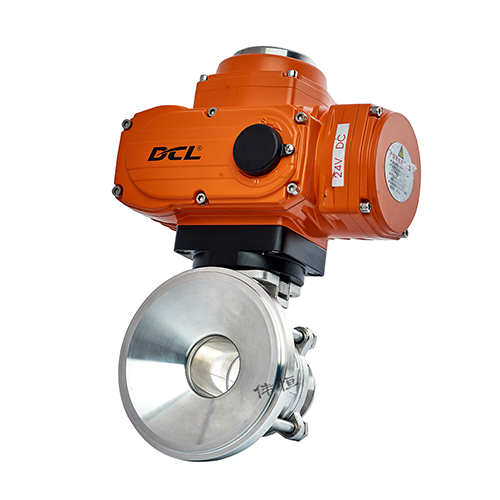
The following table summarizes the key specifications of the valve:
| Feature | Specification | Description |
|---|---|---|
| Valve Type | Quick-Release Ball Valve | Fast and secure discharge from electric tanks |
| Body Material | SS304 / SS316L Stainless Steel | Corrosion-resistant and durable |
| Seal Material | PTFE / FDA-approved elastomers | Leak-proof and chemically resistant |
| Connection Type | Threaded / Tri-clamp / Flanged | Easy installation and removal |
| Pressure Rating | 0–16 bar (PN16) | Suitable for medium-pressure pipelines |
| Temperature Range | -10°C to 150°C | Handles hot and cold fluids |
| Actuation | Manual or Electric | Supports automated or manual operation |
| Flow Control | On/Off | Precise tank discharge |
Proper operation is essential to ensure safety and prevent damage to the valve or tank system.
Inspect the valve for visible damage or wear.
Verify seal integrity and ensure no leaks are present.
Confirm that the quick-release mechanism is properly secured.
For electric actuators, check power supply, wiring, and limit switches.
Slowly rotate or actuate the valve to open, avoiding sudden fluid surges.
Ensure personnel are clear of discharge points.
Monitor the flow rate to prevent overflow or spills.
Gradually close the valve to prevent pressure spikes.
Ensure valve handle or actuator is locked in the closed position.
Check for leakage at the seals or connections.
Keep emergency shut-off procedures in place in case of accidental spills.
For electrically actuated valves, have a manual override available.
Use personal protective equipment (PPE) when handling hazardous liquids.
Proper storage ensures long-term reliability and performance of the valve.
Store in dry, clean, and ventilated areas.
Avoid direct sunlight, high humidity, or corrosive atmospheres.
Keep the valve in original packaging until installation.
Avoid dropping or impacting the valve during transport or storage.
Protect sealing surfaces from scratches or debris.
Do not expose the valve to aggressive chemicals during storage.
Apply light protective coating on metal surfaces to prevent oxidation.
Periodically inspect stored valves for corrosion or mechanical damage.
Maintain storage temperatures within -10°C to 50°C to preserve seal integrity.
Regular maintenance ensures long-term performance, leak-free operation, and safe handling of fluids.
Inspect seals, O-rings, and connections every 3–6 months.
Lubricate moving parts if necessary, using compatible, non-toxic lubricants.
Verify actuator operation and feedback signals for automated systems.
Compatible with CIP (Clean-in-Place) and SIP (Sterilize-in-Place) systems where applicable.
For manual cleaning, disassemble the quick-release valve and clean internal surfaces with non-abrasive brushes.
Avoid cleaning agents that damage PTFE seals or stainless steel surfaces.
| Issue | Possible Cause | Solution |
|---|---|---|
| Leakage at valve seat | Worn PTFE or elastomer seal | Replace the seal |
| Stiff operation | Debris inside valve | Disassemble and clean valve |
| Inconsistent flow | Partial obstruction or actuator misalignment | Inspect and recalibrate actuator |
| Valve not opening | Actuator failure | Check power supply and actuator mechanism |
Proper packaging is crucial to protect the valve during transportation and maintain its integrity until installation.
| Packaging Component | Description |
|---|---|
| Inner Protection | Plastic wrap or foam padding to prevent scratches |
| Valve Body Protection | Anti-corrosion oil or protective film |
| Actuator Protection | Cardboard or foam to prevent mechanical damage |
| Outer Packaging | Wooden crate or reinforced cardboard box |
| Labeling | Includes product specifications, model, and handling instructions |
Handle with care to avoid impact or dropping.
Store upright or as recommended to prevent mechanical stress.
Ensure valves are securely fastened in shipping crates.
The quick-release ball valve at the bottom of the electric tank is widely used across multiple industries:
Efficient drainage of chemical storage tanks.
Safe handling of hazardous or corrosive liquids.
Controlled discharge of water or process fluids.
Integration with automated tank management systems.
Drainage and cleaning of liquid food storage tanks.
Ensures hygienic operation and compliance with sanitary standards.
Discharge of coolants, lubricants, or other process fluids.
Supports automated tank emptying and maintenance workflows.
The quick-release ball valve at the bottom of the electric tank is a highly reliable, safe, and efficient solution for industrial liquid handling. Its combination of quick-release design, durable stainless steel construction, and optional electric actuation ensures:
Fast and controlled fluid discharge
Leak-proof and corrosion-resistant performance
Easy maintenance and safe operation
Compatibility with automated systems
By incorporating these valves into electric tank systems, industries can achieve enhanced operational efficiency, improved safety, and compliance with environmental and sanitary standards. They are an ideal choice for applications requiring precision, durability, and reliability under demanding conditions.
 RELATED
Tel: +86 577 8699 9257
Tel: +86 135 8786 5766 /+86 137 32079372
Email: wzweiheng@163.com
Address:No. 1633, Yidaoba Road, Binhai Industrial Park, Wenzhou City, Zhejiang Province

Scan wechat
This website uses cookies to ensure you get the best experience on our website.
 Español
 Portugues
 Pусский
 Français
 Deutsch
 한국어
한국어 العربية
 Italiano
 ไทย
ไทย Türk dili
 हिन्दी
 Melayu
 Tiếng Việt
 dansk
dansk қазақ
қазақ বাংলা
বাংলা українська
 Filipino
 o'zbek



 Phone
Phone